Saturday, February 11

Queen Elizabeth 2 in town


At almost 300-metres long and carrying 1800 passengers, the QE2 is the longest passenger vessel to visit New Zealand and is currently on a round the world cruise.

Wednesday, February 8

Write On - by Denis Welch

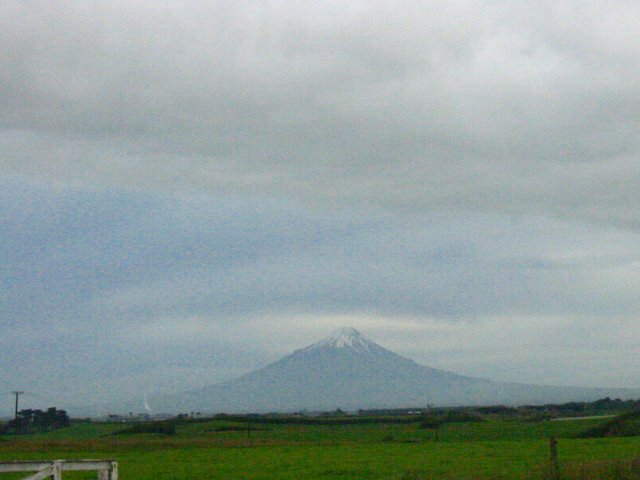
Let's hear it for a little Taranaki town that gives generously of its best.Brooding my way through the New Zealand Herald recently, my eye lighted on a profile of Wayne Gould – the man who has made a million out of sudoku. This infuriating game has been around in one form or another for at least 25 years, but Gould spun it into a worldwide craze. The guy's eye for a marketing opportunity is nothing less than impressive. Was I surprised, then, to learn that he is a "bank manager's son from Hawera"?My eyebrows barely flickered at this factoid. It only confirmed what I have known for some time, namely, that a disproportionate number of talented and successful New Zealanders were either born or spent formative years in Hawera. In particular, a remarkable number of writers have arisen from the creative crucible of this south Taranaki town (population at the last Census: 10,944 and falling).Ronald Hugh Morrieson, of course. He lived his whole life there and immortalised the place in novels like Came a Hot Friday. The townsfolk later paid tribute by tearing his house down and replacing it with a McDonald's. Novelists Fiona Kidman and Yvonne Kalman were born there. So was poet Dinah Hawken and short-story writer Phil Kawana, not to mention children's authors Gaelyn Gordon and Sherryl Jordan, and historian Frances Porter.Champion golfer Michael Campbell comes from Hawera. So does All Black ex-coach John Mitchell. Businessman Ron Trotter and his sister Judith, a top diplomat, started life there, as did former Fonterra chief Craig Norgate and long-time Concert Programme head Helen Young. Aunt Daisy got married there. Singer/songwriter Graeme Allwright – famous in France, anyway – grew up there.Last but not least (readers will undoubtedly come up with names of their own), Hawera gave the world Bryan Gould, former deputy leader of the British Labour Party and vice-chancellor of Waikato University. Wayne Gould's brother, in short.Believe me, I hold no particular brief for Hawera. I have spent very little time there and, like most New Zealanders, when I think of the place at all, what comes to mind is its water-tower, a colossal structure that rises above Hawera as the Eiffel Tower does above Paris, though possibly with less tourist throughput.I have to concede, however, that this humble borough outstrips all other small towns and most provincial cities when it comes to generating writerly talent. According to the Book Council's literary map, Tauranga (population 90,906) has produced not a single writer of note, while Whangarei (46,407), Masterton (19,497) and Levin (19,044) have managed only Jean Watson, Ian Cross and Joy Cowley between them. Even major cities such as Napier and Nelson cannot match Hawera for writers.Is it something, I wonder, in the water-tower?I asked Fiona Kidman, who replied: "I left there when I was nine months old, which makes me a little unable to answer that." She speculates, however, that support of the arts was historically strong, and that families like the Trotters were particularly supportive. On the other hand, the town's apparent love of music (musicologist Allan Thomas filled a whole book with the musical doings of Hawera in just one calendar year, 1946) does not seem to have translated into a diaspora of Haweratical virtuosi, unless you count Malvina Major, who lived in nearby Pihama for many years. I am not even going to canvas the ridiculous idea that Hawera is such an uninspiring place to live that anyone with any ability leaves it as soon as they can. I prefer Kidman's theory. When I point out that Wanganui and Opunake also stand out as birthplaces of renown, she comments: "It must be that bracing West Coast air. It gets too sultry on the other side."Though her life in the town was brief, and of necessity socially restricted, Kidman retains a soft spot for it. When she went back there to research her novel The Captive Wife – based on the real-life kidnapping of Betty Guard in the 1830s – she found that the hospital in which she'd been born was within walking distance of the place where Guard had been rescued from her captors.Could there be some Da Vinci Code-like explanation for the Hawera syndrome? I'd have liked to talk to other Haweravians, but no one returned my messages. They were probably all away on holiday. In Hawera.

Listener January 21-27 2006 Vol 202 No 3428 http://www.listener.co.nz/default,5321.sm

Borders


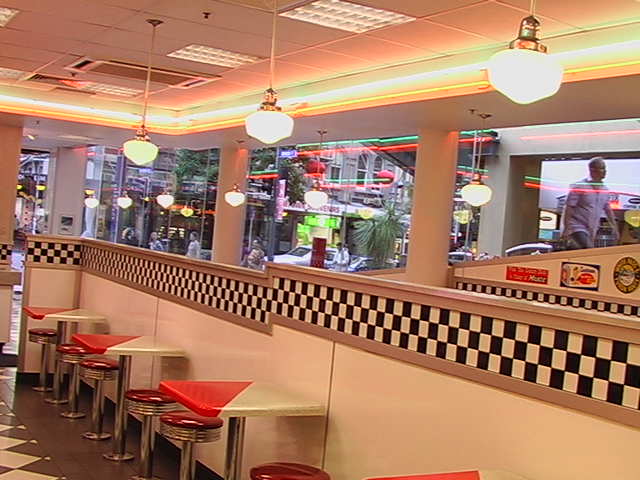
Burger King Auckland

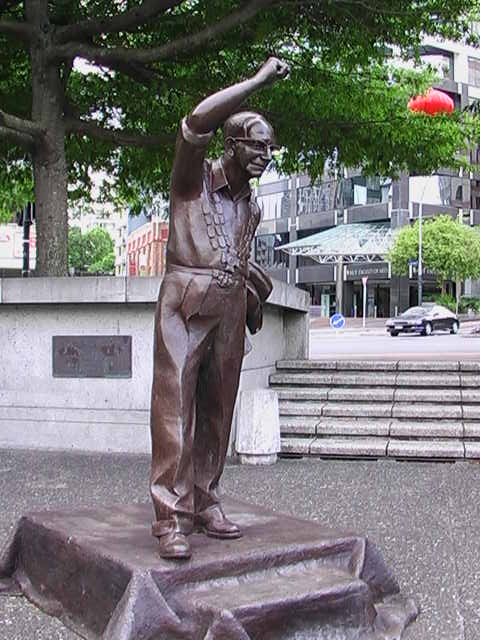
Mayor Robbie


Posing Aotea Square

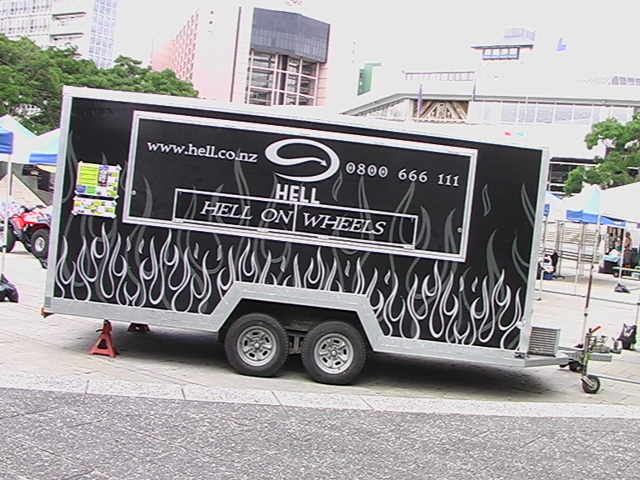
Hell On Wheels


Aotea Square Auckland

Men and Stripes - Customs Street Auckland

Floating


Man

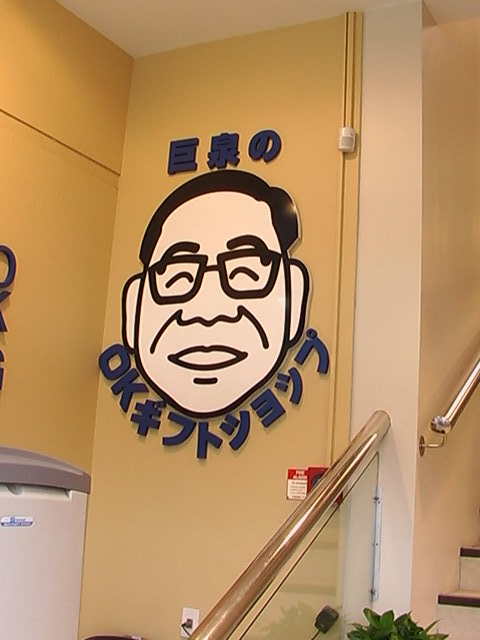
OK


Man

Towering High


Downtown Auckland

City Wakes Up - Swanson Street Auckland


Burger King - Swanson and Queen Streets

The Ascott Metropolis at Sunrise - Auckland


The elegant one and two bedroom suites are marked by a unique craftmanship that uses natural timber, stone and marble, which are characteristic and definitive of a style that belongs only to The Ascott Metropolis . The separate living and dining areas, fully equipped designer kitchens are complemented by the balconies and soundproofed windows, which open to inspiring views of the harbour and the expansive lawns and lush flora of Albert Park.
Attention to detail, and an understated flair for luxury are the hallmarks of The Ascott Group’s dedication to providing a seamless blend of comfort, luxury and convenience.
The Ascott Metropolis Hotel is nestled in the shopping districts of Queen and High Streets and is within close proximity to business and commerce. Here, numerous restaurants, bars and clubs, serving both New Zealand and international cuisines increase your options whether you’re dining in, winding down or living it up. Nearby, just off Victoria Street East, the Sky City complex beckons, for a lively night out at the casino. At your doorstep are the lush gardens of Albert Park, known for its immaculately landscaped flowerbeds and myriad nature walks.

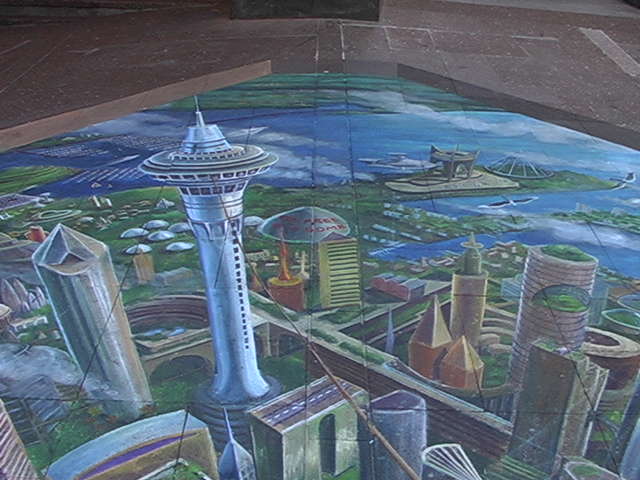
Pavement Art - Done by buskers - Queen Street


A few days before Waitangi Weekend. Two ladies did a great job over a few days

Sunday, February 5

Tower Poking Out


Its everywhere in Auckland

Man in the Window


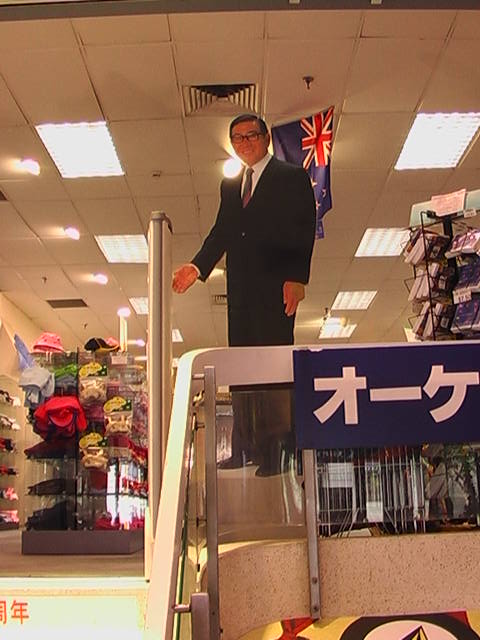
Who is he? Borders, Queen St Auckland

Wendys Frosty


We topped our Frosty. Bet you thought a Frosty couldn’t get any better. Well now you can order one with your favorite topping:crumbled Oreo’s®, M&M’s®, or Butterfinger®. It might just be the perfect way to satisfy your sweet tooth.

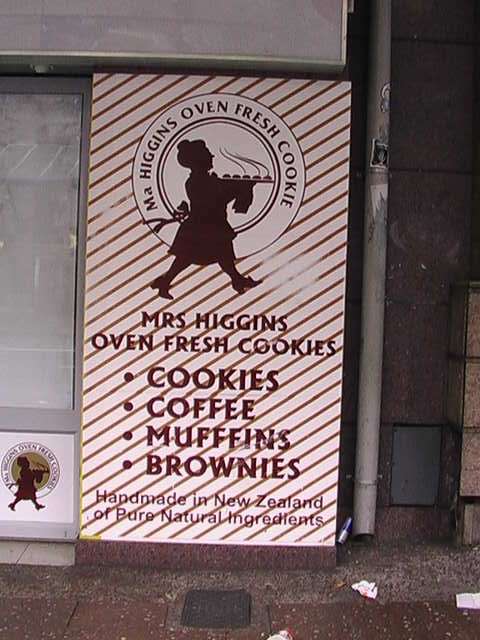
Mrs Higgins


Welcome to Mrs Higgins Cookies!
Mrs Higgins Cookies is a totally New Zealand owned franchise specialising in oven-fresh cookies, just like grandma used to make.We use only fresh, natural, GE free ingredients, from New Zealand, with no preservatives.
Fresh from the oven, soft, chewy, and delicious! Just like grandma used to make.

Mrs Higgins Cookies are not biscuits! A cookie is an American-style treat with a soft, chewy center. Biscuits are firm, crunchy, and cold. Historically, biscuits have been offered as an accompaniment to tea. Cookies, on the other hand, are best served warm, with a cold glass of milk.

Lost


After a somewhat mysterious sequence of events, an oceanic flight from Sydney to LA crashes on what appears to be a deserted island. The chance of being found and rescued is fairly small, so the survivors have to cope with a set of challenges. They have to learn to survive on the island, a mysterious place with enough dangers on its own. Also, they have to learn to live with each other if any success is to be expected. And finally, they have to live with themselves and their pasts. Interwoven with the events on the islands are flashbacks to the pasts of 14 main characters. Step by step, we learn a little more about their diverse and unexpected pasts as the group's quest to survive takes shape.
Summary written by RagingR2

Lost -


Plot Summary for "Lost" (2004)
A horrific plane crash leaves 48 passengers alive, and stranded on a remote island in the South Pacific. The survivors include doctor Jack, now freed prisoner Kate, one hit wonder rock star Charlie, Iraqi military vet Sayid, and a mysterious man named Locke. For a while their goal is simple survival, but they soon realize that it was far more than mere chance that brought them together, and each of them has a purpose that will help them unlock the island's secrets.
Summary written by rmlohner

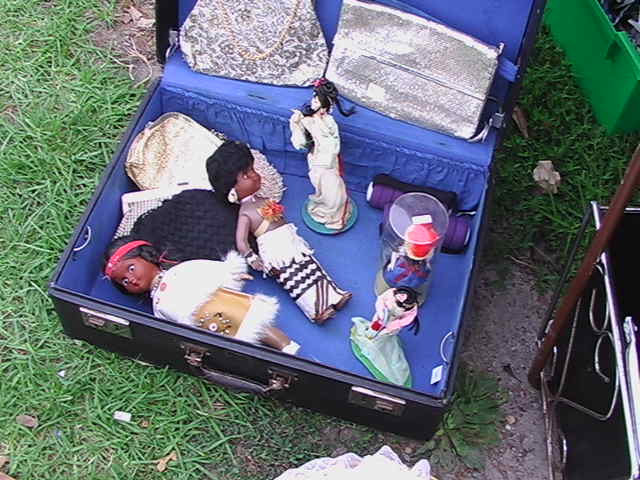
Dolls From Around The World

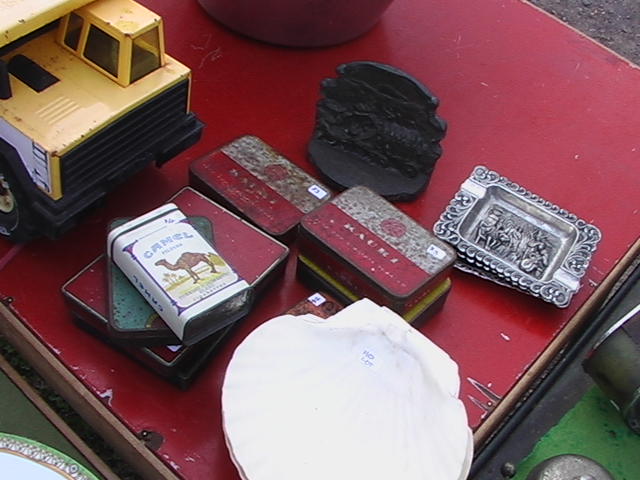
Cigarette Tins - A thing of the Past


Camel cigarettes and Kauri tobacco

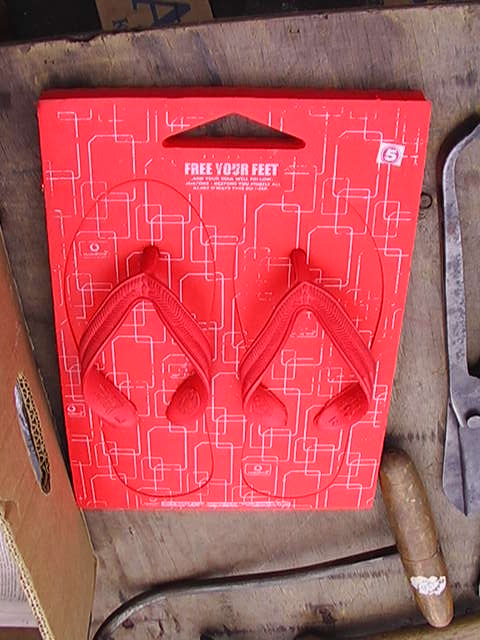
Do It Yourself Jandles


this is Kiwiana at its best. Jandles, Punga Trees, Watties Tomato Sauce, the All Blacks and Pavlova set the scene. A good old Kiwi BBQ and spit roast, spuds, mussels and lamingtons feed the troops.

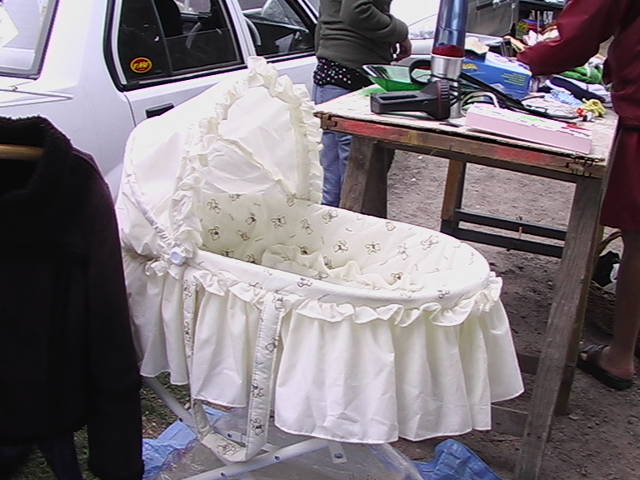
Baby Bassinette


Rock a bye Baby on the Tree Top

Hedging Your Bets


Avondale Race Course February 5th 2006

Saturday, February 4

Illustrious Energy

FILM SCREENING ILLUSTRIOUS ENERGY Screening in the Auckland Museum's Celebration of Chinese New Year, in association with the New Zealand Film Archive.Made in 1986, this is New Zealand's first feature film about the Chinese experience in New Zealand. It tells the story of two Chinese miners struggling to strike it rich in the hills and gullies of the Otago goldfields in the 1860s, dreaming of the day they can return home.The film won awards in New Zealand, Hawaii and Italy, and even today, many who have seen it consider it their favourite New Zealand film.This is a rare opportunity to see this beautifully-made film and meet in person some of the talent associated with it, including the director Leon Narbey (cinematographer in Whale Rider), editor David Coulson (Whale Rider, North Country), and Geeling Ng, who starred in it. There will be an opportunity for questions following the screening.Saturday 18th February3.30pmAPEC Room, Auckland MuseumIntroduced by Helene Wong (Script Consultant for the film)PLEASE COME AND BRING YOUR FRIENDS!

Thursday, February 2

The Action in Auckland - Sky City is 10 Years Old


1 February 2006 - Since SKYCITY opened in February 1996 we have been determined not only to provide a good return for our shareholders but also to be a responsible corporate citizen and an effective community leader. As such we are committed to ensuring we contribute positively to the Auckland way of life

Sky Tower Auckland


Sky tower - Looking up from the landing pad

Skytower in the rain

Now a Cafe


Was a Fruit and Vege Shop in the 70s-90s - K Road Auckland

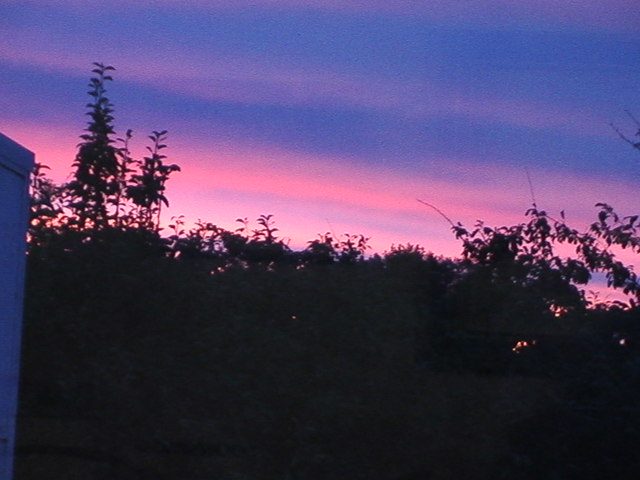
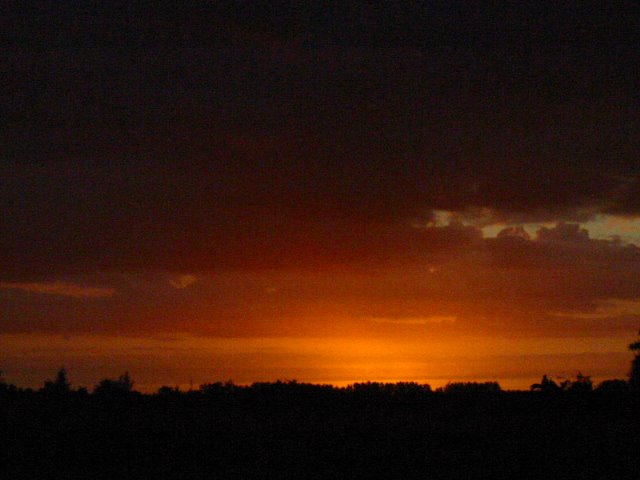
Brilliant Sunset - Western Springs January 2006

Saturday, January 21

Little Lion

Steamed B B Q Pork Bao


JING CHAR SIU BAU (STEAMED BBQ PORK BUN) - a long history going back to between 221 and 234 B.C. when Juger Liang, a man renowned for his great wisdom, was prime minister of the Shu kingdom, now Szechuan province. On six successive occasions Liang successfully repelled the fearsome barbarian tribe commanded by Meng Huoh. The seventh time, both parties having fought honorably, Meng Huoh bowed before Liang's strategy and wisdom. Everyone joined in the great march back to the Shu kingdom. On the way they came to a river. According to barbarian tradition, in order to cross the river a human life first had to be sacrificed and the head thrown into the water to ensure that the current could be safely crossed. Liang, in his great wisdom, did not wish to kill an innocent man, since his ghost could return to claim other victims, and so he ordered his cook to prepare a large steamed round loaf shaped like a head which he threw into the river. Everyone made it across without incident. Since that day, and for a long time afterwards, little steamed buns were made in the shape of heads, more oval than round. These buns are called "mantow" or "mantou" which phonetically is the same word, referring both to buns and the heads of barbarians! Only the second written character differentiates them

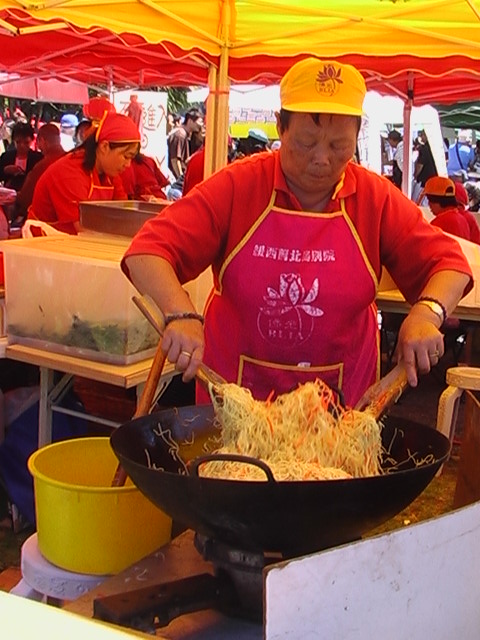
Chow Mein - Mainstream Food Today


Chow mein. A Chinese-American dish made of stewed vegetables and meat with fried noodles. The term comes from Mandarin Chinese ch'ao mien', "fried noodles," and probably was brought to the United States by Chinese cooks serving the workers on the western railroads in the 1850s. The word first appears in print in 1900. Although most chow mein bears scant resemblance to true Mandarin cooking, it has become a staple in Chinese-American restaurants...

Tea - And You Thought There Was Just One Sort


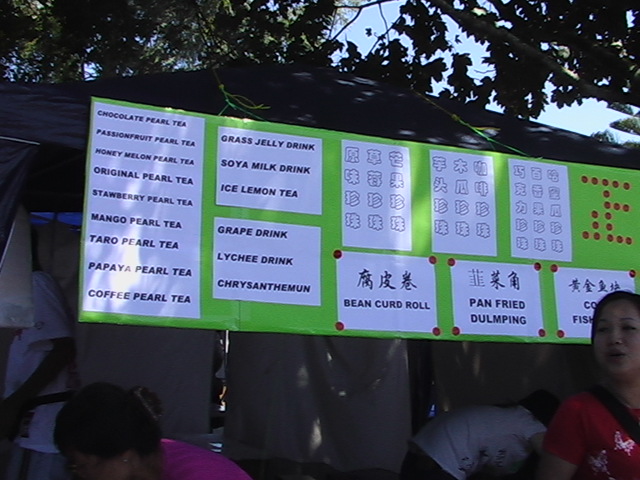
Hot Tea, Cold Tea... Your choice. If you visit Taiwan or Hong Kong you can't help but notice the unique bubble teashops on every corner. Bubble Tea to Taiwan is what coffee or soda is to the U.S. One would think Bubble Tea is the national drink by its popularity. Bubble Tea originated in Taiwan in the early 1980's at a small tea stand.

Elementary school children would look forward to buying a cup of refreshing tea after a long, hard day of work and play. Tea stands were set up in front of the schools and would compete for business with the best selling tea. One concession owner became popular with her tea when she started adding different fruit flavoring to her tea. Because of the sweet and cool taste, children loved the taste. Soon, other concessions heard about the "unique" and popular tea, so they started to add flavoring to their teas. When adding flavor, the tea and flavoring needed to be shaken well for a good all around taste. This formed bubbles in the drink, which came to be known as "Bubble Tea."

In 1983 Liu Han-Chieh introduced Taiwan to tapioca pearls. The new fad was to add tapioca pearls into a favorite drink. Most of the time tapioca pearls were served in cold infused tea. After the tea and flavor were shaken well, it topped tapioca pearls that were sitting on the bottom of a clear cup. The tapioca pearls also looked like bubbles, thus also became to known as "Bubble Tea." Bubbles floated on the top your drink and bottom of your drink.

Chicken Satay - BBQ


Served piping hot.. Who could resist?

Ming Court - Sky City


Auckland Showgrounds - 1000 of people eating, meeting friends - a brilliant day for all

Happy Chinese New Year 2006


Year of the Dog. Chinese boy in traditional dress. Auckland Chinese Community Chinese New Year Celebration - Auckland Showgrounds 21-1-06

Friday, January 20

Purple And Yellow Flowers - Rock Composition


So bright and summery. Reminds me of Dad's garden at home. Always Lillies, Gladiolus, roses, granny bonnet

A Quiet Place to think and Ponder


Nice to be away from the hustle and bustle of modern day living. King Edward Park Hawera

King Edward Park


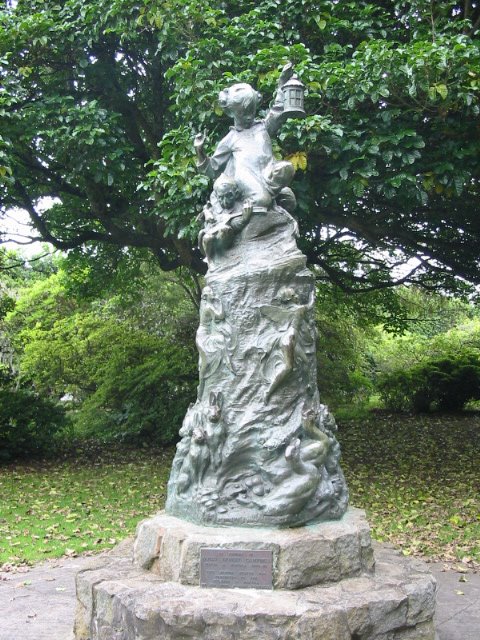
Peter Pan and Wendy Statute, Hawera. Many memories as a child playing there - the little pond, the Chinese Garden

A Month Has Passed


Christmas went and so did the New Year. Now we are ready for Chinese New Year 2006 - They year of the Dog - Starts 29 January.

Tuesday, January 3

New Day - New Year


2006

Leaving You Behind


Taranaki-Auckland 28 December 2005

Day Turns to Night December 28 2005


Taranaki to Auckland

Monday, January 2

Homeward Bound December 28 2005


Suitcase and guitar in hand

Going Home Taranaki to Auckland December 28 2005


Day is Done, Gone the Sun

Hawera December 28th


Dull Day to Lay One to Rest

New Year is Here - 2006

The start of the New Year and 3 children away in China. Dongguan is over - have visited the villages.

Thursday, December 29

For Mum

Chui Ngan Ying

1929 - 2005


Known to us all as May Chong, Ma Ma, Por Por, and Aunty May.

May was born in Punyu County, China, on August 20 1929. She was the eldest daughter, and second child of the Chui family. At the age of one she moved to Canton with her family, and lived the city life as a daughter of wealthy landlords.

She spoke little of the hardships as a child, during the Japanese occupation of the 1930s, and we know very little of her life and family in China.

She married Kenneth Chong, of Manaia, in Canton, in 1949. This was just as the Communists declared the People's Republic of China on October 1 1949. She had a certificate to leave China, citing that she was not evading military service.

They flew to Sydney and then on to Auckland – in a Sunderland aircraft – landing in Mechanics Bay.

Settling in South Taranaki, May worked alongside Ken and in the mid 1950s had their fruit shop in High Street. She looked after her family as well as working. Her cooking skills were fantastic as everyone here will attest.

After Ken’s father, Chan Sheen Chong died in 1957, the High Street Shop was sold. Ken worked at Maypole and had his market garden from1957 to 1964. Both worked very long hours in the garden, to ensure their 4 children had a good education.

Being the only Chinese family in the town had its hardships as well. The ingredients for Chinese cooking were never available, and everything had to be made from scratch. Chinese sausages were a luxury that came from Sew Hoy’s in Dunedin. Noodles were home made, and if you wanted a fresh chicken, you killed your own.

In late 1964, Ken unexpectedly died at the age of 39. May fortuitously carried on, a lonely life bringing up Barbara, Helen, Allen and Kevin on her own. Her English was limited, but with the help of Barbara Battersby, she overcame some of this, and applied for citizenship in 1968.

Both Allen and Helen left town in 1970 – Allen to Wellington and Helen to Auckland. May decided that she too would go to Auckland, with Barbara and Kevin.

So began her Auckland life – where there were other Chinese with whom she could communicate. She worked hard in the Loo’s fruit shop in K Road, then in Asia Restaurant, Otahuhu; and lastly worked with Barbara in her business.

When yum char became available, she was pleased – at last she didn’t have to make her own dim sums, roast chicken and BBQ pork weren’t a chore and Chinese groceries were easy to source.

May made a trip to China in 1980, where she met with her mother, brothers and sisters. She’d been away from home for 32 years, but life in New Zealand must have had an impact on her view on life as she only spent 24 hours of the planned 10 days before leaving suddenly for Hong Kong. This was to be her last trip home.

May had nine grandchildren - Eleanor the eldest, followed by Jody, Wendy, Anna, Mark, Cristabel, Lian, Francine and Simon. They all loved her dearly. The postcards and Christmas cards from abroad were eagerly awaited, and if you looked on the fridge door, you would see them, in pride of place.

Since May’s passing, many people have called to speak about her. Betty Loo said that May was a lovely lady, tiny, but with a good heart. Kim Gee also spoke well about her – memories of her working hard, and the cakes she made for the cooks at Asia showed that she had a kind heart.

All here today share special memories of her dynamic and complex nature, she has greatly affected those she has come in to contact with and has also allowed them to share in her life.

Although she was alone when she came to New Zealand she reveled in the company of the many friends she made throughout her time.

May was the only one of her family to come to New Zealand. But her place in all of our hearts shows that she cared for each and every one of us. She was a very private person, but each of us knows that she was a very special person – who did it her way.

Three of her grandchildren, Wendy, Anna and Mark could not be with us today as they are currently on a journey to China to discover some of their roots and culture. However they send their best regards and condolences, as do all those who could not be present today.


Track List –
1- Crying in the chapel – Elvis
2- Let it be – The Beatles
3- Candle in the wind – Elton John
4- Blowing in the wind – Peter, Paul and Mary
5- Psalm 23 – Kathy Tricoli
6- My Way – Frank Sinatra
7- How Great Though Art – Elvis

Wednesday, December 7

Maypole Super Market


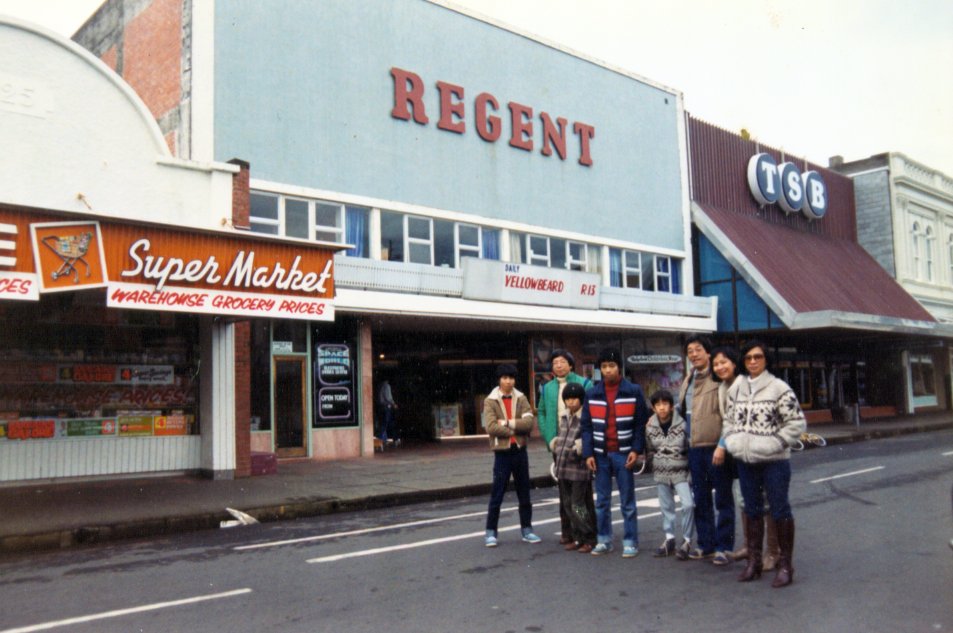
Dad worked here between 1958 to 1963 - looked after the vege and fruit department. We used to go there on the way home from school. Mr Mac lived near the back - and the Taxi Rank was there as well.

Saturday, December 3

Marilyn


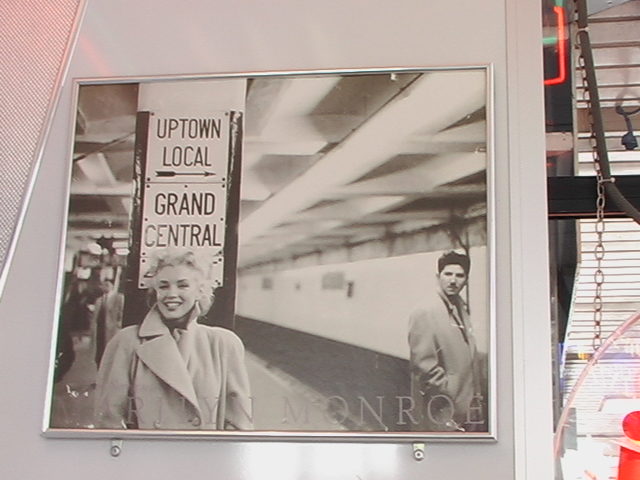
She was born Norma Jeane Mortenson on June 1, 1926 in Los Angeles, California, to Gladys Baker. As the identity of her father is undetermined, she was later baptized Norma Jeane Baker. Gladys had been a film cutter at RKO studios, but psychological problems prevented her from keeping the job and she was eventually committed to a mental institution.

Intermediate - 2 years in the middle


Intermediate schools were first opened in 1922. They were called Junior High Schools and most were attached to secondary schools. In 1933 the term Intermediate School was officially used . Intermediate school pupils and those in Forms 1 and 2 in primary schools received what was called Manual Training. Pupils had no choice about following the sexist role. Girls studied cooking and boys went to woodwork. Girls were taught sewing in their primary school classes, but all the sewing was done by hand.

School Desks To hide behind

School desks had a round hole for the ink well and ink monitors were appointed for each class. They had to keep the ink wells filled - a messy job for those who didn't have a very steady hand. From about standard 4 (present year 6) pupils worked in ink instead of pencil, and it was very hard for some of us to keep our work free of blots and smudges. Blotting paper was an absolute necessity! Girls with long plaits sometimes had the ends dunked in the inkwells of the desks behind!

Milk - came in Glass Bottles

The milkman delivered the milk and in our younger years we remember putting out a billy (a metal container like a saucepan with a lid and a handle over the top). The milkman filled the billy with a measure from his large can of fresh, untreated milk. Tom recalls his mother 'scalding' the milk in hot weather - heating it to near boiling point to prevent souring.

No such things as sliced bread


Double loaves which could be broken apart leaving an uneven slice at the end of each loaf. We called these the kissing crusts and loved the taste of them when the bread was new. There was keen competition to get that slice. We could tear off a piece of it which tasted especially good as it often felt like a forbidden treat if taken when no one was looking. http://www.nzine.co.nz/views/guinz25-50_part1.html?Rcat=History&Tcat=Growing_Up_In_NZ

Window to Another Life


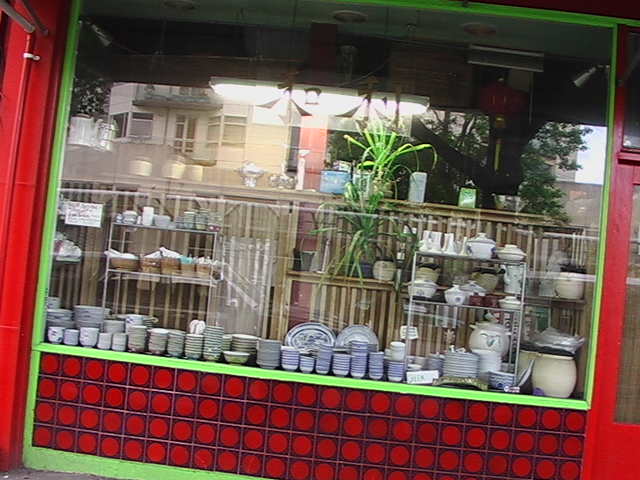
Platters and bowls - teapots and small cups... so different than breakfast at Tiffanys