Opunake Beach could have been mistaken for Hollywood yesterday, as 24 hardy souls took part in the annual Polar Bear swim dressed as movie stars.
Willy Wonka, Paris Hilton and a large number of the cast of The Sound of Music – from the Lakeside Lions – all braved the chilly Tasman Sea at noon.
The "von Trapp family" sang songs and held hands as they bravely waded out into the water.
Doug Coxhead (78), dressed as Elle Macpherson, said he had taken part in every swim since it began in 1993.
"It seems like forever," he said.
He had hoped to be the oldest swimmer this year, but was beaten out of that spot by Val Wallace (80).
"It has always been good to get involved, get out there and get wet.
"Taking part is the big thing. It has been a good thing for Opunake," Mr Coxhead said.
Lions member Mrs Wallace, aka Friedrich von Trapp, said the swim was fun.
"I have to encourage this lot," she said.
The quick dip appeared to invigorate Mrs Wallace, who joked that she was off to find a toy boy while walking back up the beach.
Nobody stayed in the water for long.
Barbecued sausages and hot soup were ready when the swimmers got out.
Each swimmer received free entry to the film Ice Age 2 – The Melt Down at Everyone's Theatre for their efforts. 26/6/06
Monday, June 26

Saturday, June 24
Winter Wonderland

A truck makes its way down Pembroke Rd from the Mountain House yesterday. Heavy snow coated the national park, providing some stunning winter scenery. Several roads into the park were closed because of the conditions. MIKE SCOTT/Taranaki Daily News
Snow closes Mt Taranaki roads
23 June 2006
By SHARON MARRISAll roads to Mt Taranaki were closed yesterday as winter's grip tightened over the North Island.
Pembroke Rd, leading to the plateau and Stratford Mountain House, and Manaia Rd, leading to Dawson Falls, were closed about 1.30pm yesterday.
The third road, Egmont Rd, which leads to North Egmont, has been closed since yesterday morning.
Kevin Whelan, engineering officer at Stratford District Council, said they had been fighting a losing battle with the snow all day. "The graders can't clear the snow as fast as it's falling," he said, "so we've closed the roads in the interest of public safety".
The snowfall eased later in the afternoon, he said, but roads were not expected to reopen until this morning, weather permitting.
Robert Bennett, Stratford area manager for the Department of Conservation, said there had been 300 to 400mm of snow. He had been working at 500m and said snow had been falling for at least a couple of hours.
Mr Bennett, an Australian who arrived at DOC just over a year ago, said the snow didn't bother him. "It's good-looking snow," he said. "A very nice environment to work in, with lots of lovely big flakes falling down."
He said there had been a snowfall outside the office last year, but it was still rare there – 1km below the park boundary.
"We don't often get much down here and, if we do, it doesn't last too long because it warms up."
The MetService was predicting strong winds for South Taranaki this morning, with wind and rain to ease over most of the North Island tomorrow
Sunday, June 11
Land sale may end Hawera races
10 June 2006
By GLENN MCLEANThe future of racing in Hawera is in serious doubt with the town's racecourse about to be sold.
Egmont Racing Club president Murray Armstrong yesterday confirmed the Hawera Racecourse partnership was about to put the 43ha property up for tender.
While he would not give specifics of the tender, the Taranaki Daily News understands three separate blocks will be sold.
The partnership comprises the Egmont Racing Club (50 percent share), the Hawera Harness Racing Club (37.5 percent) and the Opunake Racing Club (12.5 percent).
"We are going to put our toe in the water and tender various blocks of land," Mr Armstrong said.
"It might be one or it might be all. Nothing is set in concrete, we are exploring our options."
He would not rule out racing disappearing from the town altogether.
"It could happen, we're not saying it isn't a possibility. We have to consider that option."
Real estate agents spoken to yesterday estimated the land, which has been used as a racecourse since 1882, could sell for between $4 million and $6 million.
Mr Armstrong confirmed a committee had been set up nine months ago, involving Egmont, Taranaki and the Opunake clubs to look into the future of racing in Hawera.
"All financial members of the partnership have been written to and told that is an option – to sell land.
"We have reasonable cash reserves and we could go on racing for many years here.
"But racing is going through such a change, to get the full benefit of returns here to owners and trainers we have to look at options."
The biggest problem facing the Hawera partnership is its governing body, New Zealand Thoroughbred Racing, is no longer prepared to allocate funding towards facilities there.
Seven meetings each season are held at Hawera. The Egmont Racing Club conducts four, the Hawera Trotting Club has two and the Opunake Racing Club has one date there and another at New Plymouth.
Taranaki Racing Club chief executive Carey Hobbs was reluctant to comment on the issue.
Mr Hobbs admitted that a provincial racing strategy had been discussed for several months, but he would not go into specific details.
Question marks would, however, hang over just how many more meetings could be held at Pukekura Raceway, given the impact each meeting had on the course.
South Taranaki District Mayor Mary Bourke said no official proposal had been put forward to her council about the racecourse, but she was aware of several councillors who were keen for the council to buy some of the land.
"They see it as a strategic land purchase, but there has been no formal discussion of that at this stage."
When the council was investigating possible venues for its proposed multi-purpose stadium, the racecourse was talked about as a site that could be used to centralise equestrian events, or even a development area for a golf course or motor camp.
"We have had a lot of submissions in the long-term plan about setting up an industrial park," she said.
"And if you were looking around, on the face of it, that land looks really good. However, it might not turn out to be that good at all."
Giant in NZ roading in Taranaki
07 June 2006
By ROB MAETZIGTaranaki's roading industry has just got a whole lot more competitive, with the arrival of one of New Zealand's largest contracting companies.
The organisation is Fulton Hogan, a Christchurch-headquartered civil construction and roading company with a strong business presence throughout New Zealand.
Historically, that presence has been limited in Taranaki, primarily because the local roading business founded by Sir Russell Matthews – now owned by Works Civil Construction – was strong in the region.
But now Fulton Hogan has purchased Taranaki roading company D and L Crow Ltd, and it intends becoming a totally competitive part of the local roading market.
D and L Crow was formed 30 years ago by Don and Leonie Crow, and has a staff of 55. About one-third of the Bell Block-based business' activity is roading work. It also has a depot at Stratford and a quarry at Okato.
The sale to Fulton Hogan was for an undisclosed sum. Mr Crow said yesterday that he and his wife intended to take things easy – "and probably be a nuisance to everyone".
Fulton Hogan North Island manager Grant Borrie said that not only would all staff be retained, but it was likely that additional employees would be required.
"We will be looking to offer the wider Fulton Hogan services to the Taranaki market in the future, and to grow the business over the next few years," he said.
"We've taken on a great company with a very good staff, and it gives us a real leapfrog into the Taranaki market."
Until now, Fulton Hogan operations in Taranaki had been limited to water utilities and upgrade projects, and a design-and-build contract for the New Plymouth District Council. These were administered from the company's Wanganui office.
But with the purchase of the New Plymouth company, Fulton Hogan is now establishing an office at Bell Block.
The branch will be headed by Peter Matheson, an experienced engineer with Fulton Hogan for 19 years, who moves here from Central Otago.
Fulton Hogan was established in Dunedin in 1933 by Jules Fulton and Bob Hogan, and now has more than 3400 employees throughout New Zealand.
Cycle of change includes travel
06 June 2006
By KRYSTI WETTONThe most satisfying part of Glenn Demchy's 32-year career in the cycling industry has been seeing the joy people get from riding a bike he sold them.
Now he is rediscovering the pleasure of the sport himself.
The 48-year-old has sold Mitchell Cycles, in Strandon, after owning the business for 22 years.
He made the decision while cycling in France last July. He sat down to take a rest, the sun beaming down on him.
"I thought this is the life and I've got to make things a little easier."
Mr Demchy had little spare time when he ran the firm. Summer was the busiest time, when most people were out making the most of the fine weather.
The former New Zealand cycling champion's competing days were also put hold to focus on the company.
"The business came first."
His career began at 16, when he started work at Moturoa Cycles. Ironically, he was turned down for a job at Mitchell Cycles.
Mitchell Cycles was established by Dave Mitchell in 1956. It opened in Liardet St and later relocated to Devon St, then to Strandon.
Mr Demchy bought the firm in 1984 and moved it from where Zanziba is currently situated to its present location, at 467 Devon St East, five years later.
`That was when the mountain bike boom was on. I've been through a lot of booms – Raleigh Twenty, BMX and triathlon."
He said the current trend was for more women and middle-aged people to start cycling.
New Plymouth's coastal walkway had encouraged many to take up the pastime, he said.
In 2002, Mr Demchy helped ease the growing tension between cyclists and walkers sharing the walkway by giving free bells to the cyclists. About 3000 bells had been given away, he said.
He estimates he has sold more than 50,000 bikes.
"The biggest pleasure has been selling someone a bike and seeing them ride it."
The children and grandchildren of people whose bikes he had fixed when they were kids were now coming into the shop, he said.
Like any business, the cycle shop had its highs and lows.
It was during a quiet period nine years ago that Mr Demchy and his wife Katherine decided to open a Toyworld franchise in the space next to Mitchell Cycles.
"I couldn't buy enough bikes to fill the whole place," Mr Demchy said. "The two businesses complement each other."
Mr and Mrs Demchy plan to job share at Toyworld for the next two years, then travel overseas for six months, when they will reassess their future.
Mr Demchy will help Mitchell Cycles' new owners, Blair Cox and Robyn Olsen, when they are busy and will also help Toyworld set up a megastore in Auckland.
He has always insisted his employees have an interest in cycling, because giving customers advice is a big part of the job.
"We've had a lot of kids work for us over the years."
One of his star performers was Mr Cox, who started working for him 17 years ago.
"I've always wanted him to take over the bike shop."
Mitchell Cycles sponsored Mr Cox before he started working there.
He said the business would carry on as normal and continue to be Avanti Plus stockists.
Mr Cox competes and works as a bike mechanic in Ironman competitions in New Zealand and overseas.
The former Commonwealth cyclist uses his knowledge to help customers. "I've raced around the world and had top mechanics working on my bike."
Offering women courses on bike maintenance, nutrition and cycle training is one way he does this.
He said Mitchell Cycles had a great reputation and catered for everyone, from children to competitive cyclists.
Saturday, June 3
Opunake Beach

Photo from http://www.reef.opunake.co.nz/
Opunake's beach has always been regarded as particularly safe for swimming, but there has always been the odd time and tide when special, care was needed.
As early as 1899 the Town Board instructed the' Town Clerk to "have a board written" warning people of the danger of bathing on the south end of the bay.
In 1901 the Opunake Beach Society was formed. Mr Knell the Manager of the Bank of New Zealand, and Mr Blythe a watchmaker, were leaders in the move, and by 1907 they invited estimates for a bathing shed-not to exceed 215. Mr Sims built the shed for 13 pounds. Then a fresh-water barrel was placed on the beach for the convenience of picnic parties-but the report didn't say just where the fresh water came from. (Probably from one of the small springs emanating from the face of the cliff.)
When a deputation waited on the Town Board asking for a donation towards beach improvements, they were granted 15 pounds towards upgrading the bathing shed, subject to the building being handed over, free of debt, either to the Town Board or the Domain Board.
The next step forward was the opening of a kiosk in 1911. At the Annual General Meeting of the Beach Society a year later, it was reported that over two hundred people had visited the beach on New Year's Day.
Surfing In Taranaki
Surfing in Taranaki is characterised by relatively uncrowded locations and a great variety of surf breaks (over 30 are surfed regularly). From the small number of survey respondents (89) who live outside the region, Taranaki was reported as the most preferred surf location in New Zealand (33%), followed by Raglan (21%), Gisborne (13%) Mount Maunganui (11%), Wairarapa (9%), South Island (8%), Piha (4%) and Wellington (1%). The place of Taranaki as the most preferred surf location in New Zealand maybe worth investigating further.Wind direction dictates which breaks are surfed, with north Taranaki breaks (Oakura, Fitzroy, East End, Waitara Bar) being popular during south and south-east winds and South Taranaki breaks (Stent Road, Kina Road, Arawhata Road, Mangahume, Dump, Green Meadows) popular during north, north-west and north-east winds.Most surfers from the Taranaki sample of the survey indicated that they surfed at least once a week (68%). The most preferred breaks were Stent Road (29%), Rocky Point (10%), followed by Other (unnamed breaks, 18%), Fitzroy (7%), Graveyards (7%), Mangahume (7%), Kumara Patch (6%). Other breaks such as Ahu Ahu Road, Oakura made up the remaining 16%, although none of these had a preferred rating higher than 4%.
Taranaki Festival of the Arts dates for 2007
The Taranaki Festival of the Arts dates for 2007 are 26 July – 12th August.
The Taranaki Festival of the Arts 2005 was a huge success with almost 21,000 people coming through our festival gateway!
More than 250 international and New Zealand artists and performers featured in the line-up for the 2005 event. Theatre, contemporary music, fine music, choirs, literature, dance, visual arts, film, cabaret and even an ice skating rink combined in a programme of events that promised something for everyone.
2005 performances included:Hit circus act Cirque Eloize with Nomade – At night the sky is endless; Scottish performer Eddi Reader; Australia’s Mikelangelo and the Black Sea Gentlemen; The Maori Volcanics; and the acclaimed Vienna Boys Choir featuring The Combined School Choirs of New Plymouth. Plus many more!
http://www.artsfest.co.nz/index.html
South Taranaki 1881-1886
South Taranaki 1881–86: farming for what?
Writing on 19 February 1886 the Hawera correspondent of the Auckland Weekly News told of discussions going on in the town as to the future use of the Tawhiti flourmill. Built in 1881, this fine building, with excellent water power (‘motive enough to turn the universe’), well situated half a mile from the town and a quarter of a mile from the railway station, was up for lease on very reasonable terms. There was some agitation for it to be used for a meat tinning works, to fill the gap left by the collapse of Patea's West Coast Meat Preserving Company, following the destruction by fire of its works the previous May. The other proposal being mooted was a woollen mill. Al-though the district as yet had no dairy factory, no mention was made of this as a possible use. In fact the building shortly reopened to continue as a flourmill under a new owner, George Ogle. He finally closed the business and dismantled the mill in 1910. Today the dominant farm processing concern in the district is the giant Kiwi dairy factory at Whareroa. Local resi-dents must find it difficult to imagine a time when the farming options seemed wide open, and discussion on them could ignore dairying. As late as 1883 the storekeepers of Patea, Hawera and Normanby were complaining that dairying was being neglected in the district and they were having to import a large proportion of their butter
Writing on 19 February 1886 the Hawera correspondent of the Auckland Weekly News told of discussions going on in the town as to the future use of the Tawhiti flourmill. Built in 1881, this fine building, with excellent water power (‘motive enough to turn the universe’), well situated half a mile from the town and a quarter of a mile from the railway station, was up for lease on very reasonable terms. There was some agitation for it to be used for a meat tinning works, to fill the gap left by the collapse of Patea's West Coast Meat Preserving Company, following the destruction by fire of its works the previous May. The other proposal being mooted was a woollen mill. Al-though the district as yet had no dairy factory, no mention was made of this as a possible use. In fact the building shortly reopened to continue as a flourmill under a new owner, George Ogle. He finally closed the business and dismantled the mill in 1910. Today the dominant farm processing concern in the district is the giant Kiwi dairy factory at Whareroa. Local resi-dents must find it difficult to imagine a time when the farming options seemed wide open, and discussion on them could ignore dairying. As late as 1883 the storekeepers of Patea, Hawera and Normanby were complaining that dairying was being neglected in the district and they were having to import a large proportion of their butter
The South Taranaki War 1868-69
'Titokowaru's War' The war fought in South Taranaki between 1868 and 1869 is sometimes given a name like 'Titokowaru's War.' For example, in the 1920s, historian James Cowan called it 'Titokowaru's campaign'.
Labels like 'Titokowaru's campaign' name the conflict after Titokowaru, who led the Maori in their fight against the Armed Constabulary and settler Volunteer Units. However, these days, the tendancy is not to name such wars after one or other of the sometimes many protagonists involved.
How did the war start? On 19 June, 1867, during a short skirmish, two surveyors and a military settler were killed by Maori at Ketemarae, a large bush clearing near Normanby. These days, the Ketemarae Marae of Ngati Ruanui stands near the site of the killings.
The Maori involved in the skirmish fled to Te Ngutu O Te Manu, the bush stronghold of Titokowaru. At the time, Titokowaru was well known to settlers, though he had given them little cause to think that, one day, he might lead a war of Maori against them. But tensions were high in the area. Titokowaru refused to hand over the Maori involved in the killings to the authorities. War was the result
Why were tensions so high in South Taranaki in 1868?
To answer this, we need to go back by about 8 years. Following the earlier war in North Taranaki of 1860/61, the lands of Maori 'deemed to have been in armed rebellion against the Crown' were confiscated. Titokowaru's war was substantially a war fought against the enforcement of these land confiscations.
Titokowaru's fighting force mainly came from Ngati Ruanui and Nga Ruahine, two southern Taranaki tribes.
On the 12 July 1868, the Redoubt at Turuturumokai was attacked by a taua (war Party) from Titokowaru's base camp. About 26 men were stationed there, at the time of the attack.
The attack was launched at dawn, in very wet and cold conditions. Some of the younger Maori who took part would later speak of crouching for most of the night in the freezing cold, under soaking ferns nearby, waiting for the order to attack. They were only lightly clad, which was ideal for fighting but not for sitting still throughout a very cold July evening in Taranaki.
The attack was a complete surprise to the garrison.
On 21 August 1868, the first Armed Constabulary retaliatory attack was launched on the base camp of Titokowaru.
On 7 September the second attack on Te Ngutu O Te Manu was launched. This attack ended in chaos for the Armed Constabulary; and a major defeat resulted. Among those killed was Major Gustavus Von Tempsky.
Tuesday, May 30
King's to show private collections
30 May 2006
By RICHARD WOODDOld newsreels, cartoons, and New Zealand events from two large private 16mm film collections are to be shown to the public in Stratford.
Most of the films are from the collection of Bruce Cook, who died 18 months ago and bequeathed it to the King's Theatre, where he spent much of his retirement years as a volunteer projectionist.
The other collection is in the custody of Stratford's Rosemary Macpherson, whose father Eric Gordon Macpherson, filmed every major event around Kaitaia, Northland, where he farmed until his death in 1974.
The TET King's Theatre will screen special Sunday 2pm matinee sessions from June 25.
The theatre manager, Barry Milner, and the head projectionist, Merv Sayer, are gradually working through the hundreds of reels, splicing short films together, labelling the tins and making up programmes for public showing.
Mr Milner said Mr Cook collected 16mm film as a hobby. "For some reason he didn't send any of his collection to the NZ Film Archive, he wanted it kept intact here, so we've set up the Bruce Cook Film Library at the theatre. He had about 10 projectors and we have four of them working. It's slow work, but we're finding all sorts of gems."
These included 1950s newsreels, cartoons, feature films; documentaries on Rotorua, the inaugural trip of the first red railcar from Wellington to Napier; the Crown Lynn pottery factory; the first Beazley Home being built in Auckland; performing chimpanzees in a film called Manhattan Monkey Business; an interview with Peter Snell after he broke the world mile record at Wanganui; the Milford Track; Endeavour on the Ice, about a US icebreaker in the Antarctic; circuses and zoos; NZ National Film Unit Pictorial Parade; Movietone News; Universal International News 1954; Termites from Mars a six-minute cartoon; the Golden Shears championships.
"There are a couple of Danny Kaye short films, some Pete Smith Specials and possibly a Joe McDoak – people will remember them being shown preceding the feature film in the 50s and 60s," Mr Milner said. "There's one silent film that someone has shot of a trip in a Vanguard car from Rotorua to about Hawera. They stop to boil the billy and show us the sights along the way."
Eric Macpherson was a British-born schoolteacher who bought his first movie camera in 1927 (it's on display at King's) and died in 1974. He came out to visit his brother and ended up buying a farm at Peria, Northland. He filmed every major event around Kaitaia, including Opo the dolphin.
Rosemary, who is custodian of the material, is having the film transferred to DVD by a local contractor, Tony Kelly.
In January 1925, King's Theatre was the first theatre in the world outside Hollywood to show sound film.
Mr Milner said Bill Kirkwood, a former Stratford mayor, was one of the syndicate which built the theatre and he bought the importing rights to the De Forrest Phono System and installed it in the theatre. This was two years before The Jazz Singer, the first talkie feature film made.
"We'll start showing film from the collections on June 25, and thereafter on the last Sunday of the month, for as long as it remains popular," Mr Milner said. "There'll be a small cover charge for the theatre."
Sunday, May 28
Mokoia
By David Bruce
In the 1940s they agitated for a pedestrian crossing on the main road at Mokoia.
With the dairy factory on the seaward side, along with the general store/post office, and the railway station and a scatter of railway and factory houses down Beach Rd and along the Old South Rd, there were a lot of kids wanting to cross the road to school in the morning and again in the afternoon. Crossing the road to the new school.
http://www.pukeariki.com/en/stories/businessandindustry/mokia.asp
Elvis Museum in Hawera
Kevin D. Wasley has been an avid collector of Elvismemorabilia since 1957. He was born and raised inHawera and attended Hawera High School.
A painter and paperhanger by trade, he is well known
and respected around Hawera and is often seen dressed
as "The King" but his pride and joy is the Elvis
Presley Memorial Record Room which he has developed
over the years in an adapted garage next to his home
The Elvis Room contains thousands of rare recordings,
souvenirs and memorabilia, many of which were collected
during the few trips Kevin has made to the home of Elvis
Presley. (He has been through the house itself 17 times!),
Graceland.
Howard Morrison Quartet
The Howard Morrison Quartet
Howard Morrison was born in Rotorua in 1936, in a rugby-playing family. In 1955, while working as a surveyor's chainman, he started putting together vocal groups to entertain at rugby club socials in Rotorua. In 1956 he toured Australia as a member of the Aotearoa Concert Party.
Wi, Gerry, Noel and Howard On his return, he heard guitarist Gerry Merito and put together a group with Gerry and two others, Wi Wharekura and Noel Kingi, and named the group Howard Morrison Quartet. In 1958 they became part of Benny Levin's touring 'Pop Jamboree.' A recording they made of "Hoki Mai/ Po Karekare Ana" sold well, and in 1959 their parody of "The Battle Of New Orleans," recorded as The Battle Of The Waikato, became one of their biggest hits.
In 1960 they were so popular their managers released 13 singles, 3 EP's and 2 LP's. Another parody of Lonnie Donegan, "My Old Man's A Dustman" was rewritten by Gerry Merito as "My Old Man's An All Black." This was highly topical because of the huge controversy over Maoris not being allowed to tour South Africa with that year's All Blacks.
Moving into 1962, two of their singles were more parodies, with Ray Steven's "Ahab The Arab" becoming "Mori The Hori" and Pat Boone's "Speedy Gonzales" becoming "George The Wilder Colonial Boy", celebrating the exploits of escaped convict George Wilder.
Due to the constant touring and absence from families, the quartet disbanded in 1965.
The Haka
What is a haka?
Haka is the generic name for all Maori dance. Today, haka is defined as that part of the Maori dance repertoire where the men are to the fore with the women lending vocal support in the rear. Most haka seen today are haka taparahi, men's ceremonial dance-poetry performed without weapons.
"More than any aspect of Maori culture, this complex dance is an expression of the passion, vigour and identity of the race. Haka is not merely a pastime of the Maori but was also a custom of high social importance in the welcoming and entertainment of visitors. Tribal reputation rose and fell on their ability to perform the haka."
(Mahuika, 1972)
http://folksong.org.nz/ka_mate/index.html
Saturday, May 27
Hawera impresses sister city mayor
27 May 2006
By CRAIG JEFFREYFirst impressions count – and for the visiting Mayor of Hawera's Chinese sister city, Harbin, Taranaki's landscape gave him a sense of people living happy, comfortable and relaxed lives.
The delegation, with five representatives from Harbin's development zone, foreign affairs and financial sectors were welcomed by South Taranaki deputy mayor Jack Rangiwahia yesterday.
The sister city relationship was forged two years ago and while it is still in its infancy, cultural and educational exchanges have been mapped out with a planned visit from a group Harbin of 16 and 17-year-olds.
Sharing information is high on the agenda, with the Chinese keen to learn more about New Zealand's excellence in dairy technology and farming.
It was Mayor Zhongxin's first visit to New Zealand, and through an interpreter, he was glowing in his view of Taranaki.
"We live in a city of 3 million people, which covers an area of 23,000km? so the landscape you have here is beautiful and relaxing," he said.
After a formal welcome and exchange of gifts, the delegation visited Hawera Intermediate School, where students had learned some Mandarin through their language studies.
The delegation then got a taste of Kiwi culture and history with a visit to Tawhiti museum and dinner at the Aotea Marae.
An official tree-planting ceremony will be held next to the Chinese garden at King Edward Park today at noon, followed by a scenic bus trip back to New Plymouth, where the visitors fly out at 4.15pm.
New Plymouth's Womens Rest Room
Rita comes home for party 27 May 2006
By ROCHELLE WEST Not many could boast calling a toilet block home. New Plymouth's Rita Thomas can.
The 91-year-old, who was the custodian of the New Plymouth Women's Rest Rooms from 1969 to 1978, not only cleaned the toilets, she lived in the building – and loved it.
Living in a flat at the rear of the rest rooms, Mrs Thomas enjoyed the convenience of inner-city living long before it became popular.
She was employed by the council to look after the popular refuge for women – day and night.
Returning to the quaint public toilets on James Lane yesterday to celebrate the rest rooms' 70th birthday party, the memories flowed for Mrs Thomas.
There were the Friday nights when giggling school girls would change into their glad-rags in the pristine women's toilets, slap on their make-up and emerge from the cubicles young ladies for a night out.
Then there was a time in the 1970s, when the Huatoki Stream burst its banks.
Muddy waters and more than the odd rat surrounded the well-built stucco building.
"The water was right at the back door, it came up the steps. I had to be carried out."
Merchandise, including fridges and babies' clothes, from nearby flooded shops floated by as Mrs Thomas' family saved her from her watery home.
There was also the work. "My job was keeping everything clean – all the toilets, replacing toilet paper and soap, washing the floors and polishing the floors."
Today, rest room attendants look after the building during day-time hours, with the old flat being converted into an office and staff room.
Mrs Thomas was one of dozens of women and the odd man to join in the rest rooms' 70th birthday afternoon tea party yesterday.
As well as the usual party food treats, a giant cake – complete with colour photograph of the rest rooms mounted in the icing – was cut for all to sample.
The women's rest rooms, often described as a haven for women, have had a colourful history to rival its bright colour scheme.
It has survived the threat of demolition on several occasions – the latest was recently, when women rallied to successfully fight the New Plymouth District Council, which planned to demolish or move the building to make way for the Huatoki development.
More than 3000 people signed a petition to stop the demolition.
Built for the New Plymouth Borough Council in 1936, the James Lane rest rooms replaced the old women's toilets opposite the fire station on Courtenay St.
According to Puke Ariki reseachers, the central location and ease of access was heralded as a breakthrough for women of the time, especially "country visitors".
Last year, the rest rooms received recognition of its status – winning an award for the best public rest rooms in New Zealand.
Sunday, May 21
Role models of the past in Taranaki
05.06.05By Helen Frances
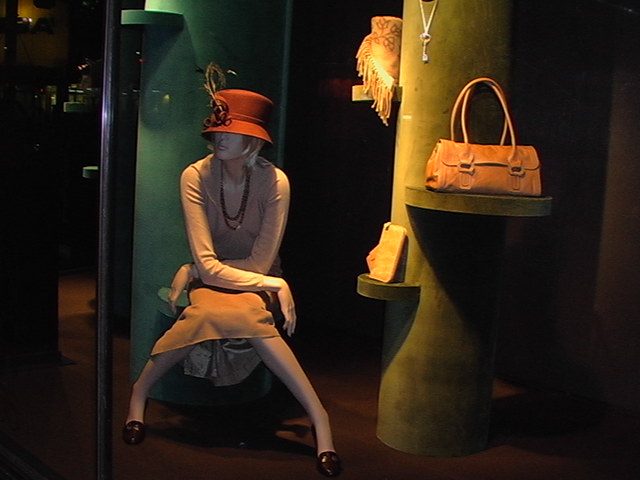
South Taranaki Museum in Patea is a wonderful place to rummage through, somewhere like your grandmother's house perhaps, where you stumble across some odd piece of technology or uncover a forgotten childhood treasure. It was a welcome dry spot on one of those days that help to produce the lush green grass for the region's dairy industry. It also led me to the fascinating Tawhiti Museum near Hawera. Between the two, a dismal day suddenly became a lot of fun. It was the sight of the Aotea Canoe floating in the rain above the main street of Patea which first attracted my attention. As kids back in the 50s and 60s we made our own fun on those weekend visits to the museum and this turned out to be just as intriguing. After a quick intro by museum volunteer and local councillor, Warwick Fry, I wandered through the rooms, marvelling at the stuff our Maori and European forebears used in their daily lives. Gramophones with trumpets, early typewriters, and antique telephones crowded the shelves, all within touching distance. The no-glass case displays continued through the Agricultural and Machinery room, where early separators and churns mixed it with horse-drawn gigs and fire trucks. Women didn't feature much in the displays so their minor presence was all the more conspicuous in the Trade and Industry room, where an antique mannequin stuck her head out of an iron lung used to help polio victims breathe at Patea Hospital in the 1950s. A harassed looking woman glared over the monthly washing in 1890. She was surrounded by instruments such as mangles, evidence of the intensely manual work of the times. Women's lives were a bit on the margins in this museum but their role was certainly clear in the court devoted to domesticity. Maori history is also a little thinner than you might expect. Maori arrived in Patea in the 14th century after navigators Turi and Rongo-Rongo found their way following directions from Kupe to look for "the river flowing towards the setting sun". In the Maori court, an unadorned fishing canoe that had been dug out of a swamp looked battered, yet solid, beneath paintings of Oriwa Haddon, the first Maori painter to show work at a Fine Arts exhibition in the capital city. Valuable cloaks, tools, and piu piu are housed behind glass in this room. But the dairy industry is certainly not forgotten. In the 1940s Patea Port was the world's largest cheese exporter and the life of the port unfolded as I strolled through a wood-panelled corridor in a simulated ship's hold accompanied by the cries of seagulls and wash of waves. Twelve portholes offered evocative glimpses into scenes from the past of a tribal settlement and once-thriving sea town. "Ooh, that one's creepy," cried a child to her mother, backing away from one porthole, where a life-size model of Skipper Barnes was busy transmitting from a ship's radio. I discovered local artist Nigel Ogle created these gems and his wonderful museum at the old Tawhiti cheese factory was the next, unexpected visit that afternoon. "You mustn't miss it," urged Warwick, so, spurred on by this fellow museum vote of confidence, I set off to Hawera and Taranaki's answer to Madame Tussauds. Tawhiti Museum was slick after Patea's olde curiosity shoppe style. A vast number of figures, made by Nigel, played out the dramas of local history in scenes of war, work and family life. The scenes are illustrated in a range of different-sized scenes, from life-size proportions to miniatures. The figures are modelled on real people and look amazingly alive. A frazzled mother in curlers holding a baby in one arm and stirring a pot with another while a toddler screamed at her apron strings brought back memories, while a chap leaping up from a long drop when the door was opened caught everyone by surprise. In other scenes, men were busy fixing cars, shearing and slaughtering sheep while women served behind counters, cooked and sewed. The Brock family rooms take visitors close up to early middle-class life at home. A kid smears her face with lipstick as the parents prepare to go out, a drawing room scene sings when you push a button and toffee spills from a child's pot in the kitchen. Maori life in the region and Kimble Bent's escape from the British Army in 1865 to live with the Hauhau tribe are also illustrated with imagination and Nigel's meticulous attention to detail in a series of dioramas. This former art teacher has turned a hobby and talent into a full-time business and has produced a hugely informative work of art that continues to grow. In Badger's Cafe next door a series of models from The Wind in the Willows illustrate scenes from the book. Musing over a cuppa and a delicious home-baked cake, I realised I should have allowed more time for Tawhiti, but that is what happens when you just follow your nose.
South Taranaki Museum in Patea is a wonderful place to rummage through, somewhere like your grandmother's house perhaps, where you stumble across some odd piece of technology or uncover a forgotten childhood treasure. It was a welcome dry spot on one of those days that help to produce the lush green grass for the region's dairy industry. It also led me to the fascinating Tawhiti Museum near Hawera. Between the two, a dismal day suddenly became a lot of fun. It was the sight of the Aotea Canoe floating in the rain above the main street of Patea which first attracted my attention. As kids back in the 50s and 60s we made our own fun on those weekend visits to the museum and this turned out to be just as intriguing. After a quick intro by museum volunteer and local councillor, Warwick Fry, I wandered through the rooms, marvelling at the stuff our Maori and European forebears used in their daily lives. Gramophones with trumpets, early typewriters, and antique telephones crowded the shelves, all within touching distance. The no-glass case displays continued through the Agricultural and Machinery room, where early separators and churns mixed it with horse-drawn gigs and fire trucks. Women didn't feature much in the displays so their minor presence was all the more conspicuous in the Trade and Industry room, where an antique mannequin stuck her head out of an iron lung used to help polio victims breathe at Patea Hospital in the 1950s. A harassed looking woman glared over the monthly washing in 1890. She was surrounded by instruments such as mangles, evidence of the intensely manual work of the times. Women's lives were a bit on the margins in this museum but their role was certainly clear in the court devoted to domesticity. Maori history is also a little thinner than you might expect. Maori arrived in Patea in the 14th century after navigators Turi and Rongo-Rongo found their way following directions from Kupe to look for "the river flowing towards the setting sun". In the Maori court, an unadorned fishing canoe that had been dug out of a swamp looked battered, yet solid, beneath paintings of Oriwa Haddon, the first Maori painter to show work at a Fine Arts exhibition in the capital city. Valuable cloaks, tools, and piu piu are housed behind glass in this room. But the dairy industry is certainly not forgotten. In the 1940s Patea Port was the world's largest cheese exporter and the life of the port unfolded as I strolled through a wood-panelled corridor in a simulated ship's hold accompanied by the cries of seagulls and wash of waves. Twelve portholes offered evocative glimpses into scenes from the past of a tribal settlement and once-thriving sea town. "Ooh, that one's creepy," cried a child to her mother, backing away from one porthole, where a life-size model of Skipper Barnes was busy transmitting from a ship's radio. I discovered local artist Nigel Ogle created these gems and his wonderful museum at the old Tawhiti cheese factory was the next, unexpected visit that afternoon. "You mustn't miss it," urged Warwick, so, spurred on by this fellow museum vote of confidence, I set off to Hawera and Taranaki's answer to Madame Tussauds. Tawhiti Museum was slick after Patea's olde curiosity shoppe style. A vast number of figures, made by Nigel, played out the dramas of local history in scenes of war, work and family life. The scenes are illustrated in a range of different-sized scenes, from life-size proportions to miniatures. The figures are modelled on real people and look amazingly alive. A frazzled mother in curlers holding a baby in one arm and stirring a pot with another while a toddler screamed at her apron strings brought back memories, while a chap leaping up from a long drop when the door was opened caught everyone by surprise. In other scenes, men were busy fixing cars, shearing and slaughtering sheep while women served behind counters, cooked and sewed. The Brock family rooms take visitors close up to early middle-class life at home. A kid smears her face with lipstick as the parents prepare to go out, a drawing room scene sings when you push a button and toffee spills from a child's pot in the kitchen. Maori life in the region and Kimble Bent's escape from the British Army in 1865 to live with the Hauhau tribe are also illustrated with imagination and Nigel's meticulous attention to detail in a series of dioramas. This former art teacher has turned a hobby and talent into a full-time business and has produced a hugely informative work of art that continues to grow. In Badger's Cafe next door a series of models from The Wind in the Willows illustrate scenes from the book. Musing over a cuppa and a delicious home-baked cake, I realised I should have allowed more time for Tawhiti, but that is what happens when you just follow your nose.
Subscribe to:
Posts (Atom)