By ROB MAETZIG - Taranaki Daily News Saturday, 3 March 2007
School buildings and land valued at millions are sitting empty and unused – and open to attack by vandals and thieves – throughout Taranaki.
Taranaki Daily News investigations reveal 37 surplus school properties are currently mired in a Ministry of Education disposal process – a slow procedure which takes years to complete.
Eighteen of the surplus properties are closed schools and these are being targeted by thieves who have now turned to trashing them as well as taking the valuable copper on the buildings.
Last week four now-closed coastal Taranaki schools – Oaonui, Warea, Pungarehu and Newall – have been hit by the thieves.
And there are plenty more for them to choose from. Te Kiri, Motunui, Tahora, Mahoe, Pihama, Otakeho, Stanley, Okaiawa, Kapuni, Takaora, Okato, Matau, Kaimiro and Douglas are all sitting empty and unattended – and prime candidates to be attacked by what authorities fear is an organised crime operation stealing the copper.
The thieves can even access a ministry website to check on the status of all the properties. The site lists every "active" property disposal in New Zealand, their exact address, and even the names and addresses of the agents contracted to dispose of each property.
The ministry is legally required to dispose of surplus properties – schools included – that are no longer needed for a so-called "public work".
There are four key sequential steps in this disposal process:
Transferring a property to another Government department or territorial local authority if it is required for another public work.
If the property is not so required, then it will be offered back for sale to the previous owner or their successors.
If there is no such sale, then the property is assessed for any Treaty of Waitangi claims under what is called the Maori Protection Mechanism. If any claim is successful, then the property is usually "land banked" pending settlement of the claim by the Government.
If a property clears those three steps, it is then placed on the open market for sale.
Of the 37 Taranaki properties now going through the disposal process, just four are on the open market – three of them are at Opunake and Te Kiri. The other property on the open market is the former Te Kiri School.
Fifteen properties, including the former Tahora, Motunui, Okato, Matau, Oaonui, Kaimiro and Douglas schools, are at the offer-back stage. All the rest, including the former schools at Pungarehu, Mahoe, Pihama, Otakeho, Stanley Rd, Okaiawa, Warea, Kapuni, Newall Rd and Takaora, are being held by the Maori Protection Mechanism.
Saturday, March 3

Tuesday, February 6
Visitor spies smoke in museum workshop
Visitor spies smoke in museum workshop By JAYNE HULBERT - Taranaki Daily News Tuesday, 6 February 2007
Nigel Ogle watched in despair as firefighters battled a blaze in a workshop at his landmark Tawhiti Museum near Hawera yesterday.
According to the fire brigade, the blaze is believed to have started by spontaneous combustion from chemical-soaked rags in a rubbish bin.
A member of the public spotted smoke coming from the museum workshop about 2.30pm and alerted staff.
Tawhiti Museum, owned by Mr Ogle and his wife, Teresa Ogle, is well-known for its life-sized models and displays.
It was recently revealed the museum would be working with Wellington's Weta Workshop on a new display.
At the scene of the fire, an emotional Mr Ogle was comforted by his wife and staff. The couple did not want to comment about the fire.
Hawera Fire Service chief Darryl Fowler said the smoke damage to the workshop and its contents was "very severe".
Mr Ogle had been working on several mannequins bound for a South Island museum.
People had been working in the workshop earlier, but they had locked up for the day around lunchtime.
Mr Fowler said it was fortunate the visitor had seen the smoke.
"The early find really saved it from developing into something larger," he said.
Because of all the chemicals and resins in the workshop, the fire service's hazardous substance and decontamination unit was taken to the fire as a precaution, but was not required.
Last week Mr Ogle revealed he was working on a project called South Seas Traders, in conjunction with Weta Workshop.
The display would tell the stories of early contact between European traders and Maori tribes.
Mr Ogle said it would take two years to build at the Tawhiti complex in Ohangai Rd.
The South Taranaki District Council is investing $500,000 in the project.
Nigel Ogle watched in despair as firefighters battled a blaze in a workshop at his landmark Tawhiti Museum near Hawera yesterday.
According to the fire brigade, the blaze is believed to have started by spontaneous combustion from chemical-soaked rags in a rubbish bin.
A member of the public spotted smoke coming from the museum workshop about 2.30pm and alerted staff.
Tawhiti Museum, owned by Mr Ogle and his wife, Teresa Ogle, is well-known for its life-sized models and displays.
It was recently revealed the museum would be working with Wellington's Weta Workshop on a new display.
At the scene of the fire, an emotional Mr Ogle was comforted by his wife and staff. The couple did not want to comment about the fire.
Hawera Fire Service chief Darryl Fowler said the smoke damage to the workshop and its contents was "very severe".
Mr Ogle had been working on several mannequins bound for a South Island museum.
People had been working in the workshop earlier, but they had locked up for the day around lunchtime.
Mr Fowler said it was fortunate the visitor had seen the smoke.
"The early find really saved it from developing into something larger," he said.
Because of all the chemicals and resins in the workshop, the fire service's hazardous substance and decontamination unit was taken to the fire as a precaution, but was not required.
Last week Mr Ogle revealed he was working on a project called South Seas Traders, in conjunction with Weta Workshop.
The display would tell the stories of early contact between European traders and Maori tribes.
Mr Ogle said it would take two years to build at the Tawhiti complex in Ohangai Rd.
The South Taranaki District Council is investing $500,000 in the project.
Tuesday, December 26
Take me back to the 'Naki
Monday December 25, 2006By Clare Moleta
Mt Egmont overlooking Taranaki.
Dad wants to go back to Taranaki. It's been some time; he was just a baby when his parents tried to make a go of farming newly-cleared land east of Stratford.
That was 1939. On their first visit, his proud Italian grandparents christened him 'Il Principe di Pukengahu'- the Prince of Pukengahu - but after a lonely year in a broken-down cottage with no running water, his mum took her Prince and went home to Island Bay.
Dad left New Zealand as a teenager and he's barely lived here since. Now he's suggesting a road trip. Just dad, myself and Leon.
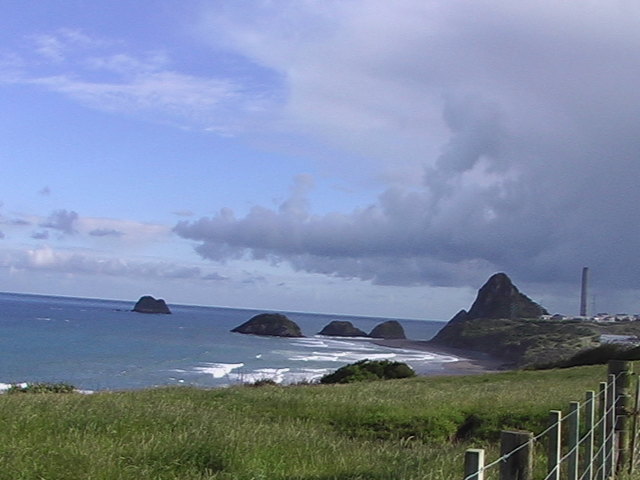
We head south from New Plymouth on SH45 and the mountain keeps us company in shining 3D. Green ridges flatten gently to the coast, although you generally need to get off Surf Highway to actually see the ocean.
Just past the turnoff to the Cape Egmont lighthouse is the inland road to Parihaka where we've arranged to meet Ina Hohaia, a Kuia on the marae. We follow my friend Nedina's hand-drawn map into the village - past the graveyard, the houses and the lower whare and up to the pa with its monument to Te Whiti o Rongomai. A delicate, short-haired woman in clogs gets out of her car and welcomes us, brushing formalities aside: "I'm Nedina's mum you know". In photos from the 1960s the monument is a ship's mast drowning in a sea of grass; now it rises freshly-painted above an immaculate lawn.
Te Whiti and Tohu Kakahi inspired decades of peaceful and creative resistance to land confiscation but the Government preferred the zero tolerance approach.
In 1881 the military marched into Parihaka. Ina shows us the hill where soldiers trained a canon on the marae. "It was very sad what happened here", she says calmly.
Despite mass arrests, destruction and 'redistribution' of land, the Parihaka of Ina's childhood was a vibrant community again. She remembers big hui, people coming from everywhere. Later, many families left to find work and those who stayed struggled to maintain the place. But slowly the next generation is coming home. Successful projects like the Parihaka exhibition at Wellington's City Gallery have caught the public imagination. And in 2003 the Parihaka leaders were recognised post-humously by an international delegation including representatives of Martin Luther King Jnr and Mahatma Gandhi for their work and sacrifice as pioneers of non-violent action.
"Anyone can come here", says Ina. And as she hugs my dad goodbye and tells him not to stay away from home too long there's no mistaking her pleasure that people want to come.
Back on the highway we stop for toasties in Opunake. You can feel history in every one of these towns; in the war memorials and graffitied blockhouses, the ruined dairy co-ops and grand, disused Banks of New Zealand.
Manaia's old post office is a tattoo parlour now. We follow a heritage sign into Ohawe and find a walled graveyard tucked away in a field behind a ditch and an electric fence. Leon braves the electricity/liquid combination and discovers the graves of about 20 soldiers killed taking Otapawa pa in 1866.
We reach Hawera late in the day. This is the town that took a stand on settler's land rights in 1879 by seceding from the rest of New Zealand. The Republic lasted 18 days. In the quiet back streets we track down another piece of history. Turuturu Mokai Pa has been impressively restored with deep encircling trenches and storage pits but the surrounding reserve has a neglected feel. A tall guy in footy shorts comes round the corner and asks if he can borrow a phone to arrange getting his car towed. While he waits for his wife, he explains that his hapu just got the site back as part of a Treaty settlement. Now they're clearing the overgrown walkway and planning a summer campground. His two little girls race off up the pa, followed by an even littler boy wearing one blue gumboot. We tag along. From the top there's a 360-view and a definite fortress feeling.
After dark we check into the gracious White Hart Hotel and head downstairs to the bar, where Leon introduces my father to pool. "I quite enjoyed it," Dad confesses next morning, like a good kid who just discovered smoking.
Hawera's High Street is lined with grand old buildings in every shade of pastel but Auntie's Diner has net curtains, mirrored booths and a hoki and chips breakfast special. By 8.30am the place is heaving but we manage to squeeze inside.
No such luck at the Tawhiti Museum. It's hard to go past a good diorama and guidebooks describe this collection as 'remarkable', 'unusual' and even 'splendid', so we loiter around the gates for a while before admitting we got the opening hours wrong. But the detour was worth it for the drive back to the coast through green fields meshed together with barberry hedges.
Patea has a stubborn feel about it. nine hundred people lost their jobs when the freezing works closed down here in 1984, but the town refused to die. These days it's even having a property boom of sorts. Main street highlights include the Aotea canoe memorial, the technicolour museum and the freezing works display, where a life-size model of 'the chain-slaughter process' leaves nothing at all to the imagination. That kicks in when you see the ruin itself: a desolate city by the river, surrendering to flax and barbed wire while the wind moves through like the place is still breathing. Leon takes a photo of the single men's cabins for his dad who worked here as a slaughterman.
I took a photo for my dad two days ago. Around sunset we came off the lonely and lovely Forgotten Highway at Stratford, turned our backs to the mountain and headed east. Down Bird Road the hills enclosed us in a secret valley and all the clouds caught fire at once. At a junction we found the faded pink Pukengahu Hall, built in 1926. Dad posed for a picture, his expression pleased and serious. For a moment, the Prince of Pukengahu again.
Mt Egmont overlooking Taranaki.
Dad wants to go back to Taranaki. It's been some time; he was just a baby when his parents tried to make a go of farming newly-cleared land east of Stratford.
That was 1939. On their first visit, his proud Italian grandparents christened him 'Il Principe di Pukengahu'- the Prince of Pukengahu - but after a lonely year in a broken-down cottage with no running water, his mum took her Prince and went home to Island Bay.
Dad left New Zealand as a teenager and he's barely lived here since. Now he's suggesting a road trip. Just dad, myself and Leon.
We head south from New Plymouth on SH45 and the mountain keeps us company in shining 3D. Green ridges flatten gently to the coast, although you generally need to get off Surf Highway to actually see the ocean.
Just past the turnoff to the Cape Egmont lighthouse is the inland road to Parihaka where we've arranged to meet Ina Hohaia, a Kuia on the marae. We follow my friend Nedina's hand-drawn map into the village - past the graveyard, the houses and the lower whare and up to the pa with its monument to Te Whiti o Rongomai. A delicate, short-haired woman in clogs gets out of her car and welcomes us, brushing formalities aside: "I'm Nedina's mum you know". In photos from the 1960s the monument is a ship's mast drowning in a sea of grass; now it rises freshly-painted above an immaculate lawn.
Te Whiti and Tohu Kakahi inspired decades of peaceful and creative resistance to land confiscation but the Government preferred the zero tolerance approach.
In 1881 the military marched into Parihaka. Ina shows us the hill where soldiers trained a canon on the marae. "It was very sad what happened here", she says calmly.
Despite mass arrests, destruction and 'redistribution' of land, the Parihaka of Ina's childhood was a vibrant community again. She remembers big hui, people coming from everywhere. Later, many families left to find work and those who stayed struggled to maintain the place. But slowly the next generation is coming home. Successful projects like the Parihaka exhibition at Wellington's City Gallery have caught the public imagination. And in 2003 the Parihaka leaders were recognised post-humously by an international delegation including representatives of Martin Luther King Jnr and Mahatma Gandhi for their work and sacrifice as pioneers of non-violent action.
"Anyone can come here", says Ina. And as she hugs my dad goodbye and tells him not to stay away from home too long there's no mistaking her pleasure that people want to come.
Back on the highway we stop for toasties in Opunake. You can feel history in every one of these towns; in the war memorials and graffitied blockhouses, the ruined dairy co-ops and grand, disused Banks of New Zealand.
Manaia's old post office is a tattoo parlour now. We follow a heritage sign into Ohawe and find a walled graveyard tucked away in a field behind a ditch and an electric fence. Leon braves the electricity/liquid combination and discovers the graves of about 20 soldiers killed taking Otapawa pa in 1866.
We reach Hawera late in the day. This is the town that took a stand on settler's land rights in 1879 by seceding from the rest of New Zealand. The Republic lasted 18 days. In the quiet back streets we track down another piece of history. Turuturu Mokai Pa has been impressively restored with deep encircling trenches and storage pits but the surrounding reserve has a neglected feel. A tall guy in footy shorts comes round the corner and asks if he can borrow a phone to arrange getting his car towed. While he waits for his wife, he explains that his hapu just got the site back as part of a Treaty settlement. Now they're clearing the overgrown walkway and planning a summer campground. His two little girls race off up the pa, followed by an even littler boy wearing one blue gumboot. We tag along. From the top there's a 360-view and a definite fortress feeling.
After dark we check into the gracious White Hart Hotel and head downstairs to the bar, where Leon introduces my father to pool. "I quite enjoyed it," Dad confesses next morning, like a good kid who just discovered smoking.
Hawera's High Street is lined with grand old buildings in every shade of pastel but Auntie's Diner has net curtains, mirrored booths and a hoki and chips breakfast special. By 8.30am the place is heaving but we manage to squeeze inside.
No such luck at the Tawhiti Museum. It's hard to go past a good diorama and guidebooks describe this collection as 'remarkable', 'unusual' and even 'splendid', so we loiter around the gates for a while before admitting we got the opening hours wrong. But the detour was worth it for the drive back to the coast through green fields meshed together with barberry hedges.
Patea has a stubborn feel about it. nine hundred people lost their jobs when the freezing works closed down here in 1984, but the town refused to die. These days it's even having a property boom of sorts. Main street highlights include the Aotea canoe memorial, the technicolour museum and the freezing works display, where a life-size model of 'the chain-slaughter process' leaves nothing at all to the imagination. That kicks in when you see the ruin itself: a desolate city by the river, surrendering to flax and barbed wire while the wind moves through like the place is still breathing. Leon takes a photo of the single men's cabins for his dad who worked here as a slaughterman.
I took a photo for my dad two days ago. Around sunset we came off the lonely and lovely Forgotten Highway at Stratford, turned our backs to the mountain and headed east. Down Bird Road the hills enclosed us in a secret valley and all the clouds caught fire at once. At a junction we found the faded pink Pukengahu Hall, built in 1926. Dad posed for a picture, his expression pleased and serious. For a moment, the Prince of Pukengahu again.
Saturday, December 23







Subscribe to:
Posts (Atom)