30 May 2006
By RICHARD WOODDOld newsreels, cartoons, and New Zealand events from two large private 16mm film collections are to be shown to the public in Stratford.
Most of the films are from the collection of Bruce Cook, who died 18 months ago and bequeathed it to the King's Theatre, where he spent much of his retirement years as a volunteer projectionist.
The other collection is in the custody of Stratford's Rosemary Macpherson, whose father Eric Gordon Macpherson, filmed every major event around Kaitaia, Northland, where he farmed until his death in 1974.
The TET King's Theatre will screen special Sunday 2pm matinee sessions from June 25.
The theatre manager, Barry Milner, and the head projectionist, Merv Sayer, are gradually working through the hundreds of reels, splicing short films together, labelling the tins and making up programmes for public showing.
Mr Milner said Mr Cook collected 16mm film as a hobby. "For some reason he didn't send any of his collection to the NZ Film Archive, he wanted it kept intact here, so we've set up the Bruce Cook Film Library at the theatre. He had about 10 projectors and we have four of them working. It's slow work, but we're finding all sorts of gems."
These included 1950s newsreels, cartoons, feature films; documentaries on Rotorua, the inaugural trip of the first red railcar from Wellington to Napier; the Crown Lynn pottery factory; the first Beazley Home being built in Auckland; performing chimpanzees in a film called Manhattan Monkey Business; an interview with Peter Snell after he broke the world mile record at Wanganui; the Milford Track; Endeavour on the Ice, about a US icebreaker in the Antarctic; circuses and zoos; NZ National Film Unit Pictorial Parade; Movietone News; Universal International News 1954; Termites from Mars a six-minute cartoon; the Golden Shears championships.
"There are a couple of Danny Kaye short films, some Pete Smith Specials and possibly a Joe McDoak – people will remember them being shown preceding the feature film in the 50s and 60s," Mr Milner said. "There's one silent film that someone has shot of a trip in a Vanguard car from Rotorua to about Hawera. They stop to boil the billy and show us the sights along the way."
Eric Macpherson was a British-born schoolteacher who bought his first movie camera in 1927 (it's on display at King's) and died in 1974. He came out to visit his brother and ended up buying a farm at Peria, Northland. He filmed every major event around Kaitaia, including Opo the dolphin.
Rosemary, who is custodian of the material, is having the film transferred to DVD by a local contractor, Tony Kelly.
In January 1925, King's Theatre was the first theatre in the world outside Hollywood to show sound film.
Mr Milner said Bill Kirkwood, a former Stratford mayor, was one of the syndicate which built the theatre and he bought the importing rights to the De Forrest Phono System and installed it in the theatre. This was two years before The Jazz Singer, the first talkie feature film made.
"We'll start showing film from the collections on June 25, and thereafter on the last Sunday of the month, for as long as it remains popular," Mr Milner said. "There'll be a small cover charge for the theatre."
Tuesday, May 30

Sunday, May 28
Mokoia
By David Bruce
In the 1940s they agitated for a pedestrian crossing on the main road at Mokoia.
With the dairy factory on the seaward side, along with the general store/post office, and the railway station and a scatter of railway and factory houses down Beach Rd and along the Old South Rd, there were a lot of kids wanting to cross the road to school in the morning and again in the afternoon. Crossing the road to the new school.
http://www.pukeariki.com/en/stories/businessandindustry/mokia.asp
Elvis Museum in Hawera
Kevin D. Wasley has been an avid collector of Elvismemorabilia since 1957. He was born and raised inHawera and attended Hawera High School.
A painter and paperhanger by trade, he is well known
and respected around Hawera and is often seen dressed
as "The King" but his pride and joy is the Elvis
Presley Memorial Record Room which he has developed
over the years in an adapted garage next to his home
The Elvis Room contains thousands of rare recordings,
souvenirs and memorabilia, many of which were collected
during the few trips Kevin has made to the home of Elvis
Presley. (He has been through the house itself 17 times!),
Graceland.
Howard Morrison Quartet
The Howard Morrison Quartet
Howard Morrison was born in Rotorua in 1936, in a rugby-playing family. In 1955, while working as a surveyor's chainman, he started putting together vocal groups to entertain at rugby club socials in Rotorua. In 1956 he toured Australia as a member of the Aotearoa Concert Party.
Wi, Gerry, Noel and Howard On his return, he heard guitarist Gerry Merito and put together a group with Gerry and two others, Wi Wharekura and Noel Kingi, and named the group Howard Morrison Quartet. In 1958 they became part of Benny Levin's touring 'Pop Jamboree.' A recording they made of "Hoki Mai/ Po Karekare Ana" sold well, and in 1959 their parody of "The Battle Of New Orleans," recorded as The Battle Of The Waikato, became one of their biggest hits.
In 1960 they were so popular their managers released 13 singles, 3 EP's and 2 LP's. Another parody of Lonnie Donegan, "My Old Man's A Dustman" was rewritten by Gerry Merito as "My Old Man's An All Black." This was highly topical because of the huge controversy over Maoris not being allowed to tour South Africa with that year's All Blacks.
Moving into 1962, two of their singles were more parodies, with Ray Steven's "Ahab The Arab" becoming "Mori The Hori" and Pat Boone's "Speedy Gonzales" becoming "George The Wilder Colonial Boy", celebrating the exploits of escaped convict George Wilder.
Due to the constant touring and absence from families, the quartet disbanded in 1965.
The Haka
What is a haka?
Haka is the generic name for all Maori dance. Today, haka is defined as that part of the Maori dance repertoire where the men are to the fore with the women lending vocal support in the rear. Most haka seen today are haka taparahi, men's ceremonial dance-poetry performed without weapons.
"More than any aspect of Maori culture, this complex dance is an expression of the passion, vigour and identity of the race. Haka is not merely a pastime of the Maori but was also a custom of high social importance in the welcoming and entertainment of visitors. Tribal reputation rose and fell on their ability to perform the haka."
(Mahuika, 1972)
http://folksong.org.nz/ka_mate/index.html
Saturday, May 27
Hawera impresses sister city mayor
27 May 2006
By CRAIG JEFFREYFirst impressions count – and for the visiting Mayor of Hawera's Chinese sister city, Harbin, Taranaki's landscape gave him a sense of people living happy, comfortable and relaxed lives.
The delegation, with five representatives from Harbin's development zone, foreign affairs and financial sectors were welcomed by South Taranaki deputy mayor Jack Rangiwahia yesterday.
The sister city relationship was forged two years ago and while it is still in its infancy, cultural and educational exchanges have been mapped out with a planned visit from a group Harbin of 16 and 17-year-olds.
Sharing information is high on the agenda, with the Chinese keen to learn more about New Zealand's excellence in dairy technology and farming.
It was Mayor Zhongxin's first visit to New Zealand, and through an interpreter, he was glowing in his view of Taranaki.
"We live in a city of 3 million people, which covers an area of 23,000km? so the landscape you have here is beautiful and relaxing," he said.
After a formal welcome and exchange of gifts, the delegation visited Hawera Intermediate School, where students had learned some Mandarin through their language studies.
The delegation then got a taste of Kiwi culture and history with a visit to Tawhiti museum and dinner at the Aotea Marae.
An official tree-planting ceremony will be held next to the Chinese garden at King Edward Park today at noon, followed by a scenic bus trip back to New Plymouth, where the visitors fly out at 4.15pm.
New Plymouth's Womens Rest Room
Rita comes home for party 27 May 2006
By ROCHELLE WEST Not many could boast calling a toilet block home. New Plymouth's Rita Thomas can.
The 91-year-old, who was the custodian of the New Plymouth Women's Rest Rooms from 1969 to 1978, not only cleaned the toilets, she lived in the building – and loved it.
Living in a flat at the rear of the rest rooms, Mrs Thomas enjoyed the convenience of inner-city living long before it became popular.
She was employed by the council to look after the popular refuge for women – day and night.
Returning to the quaint public toilets on James Lane yesterday to celebrate the rest rooms' 70th birthday party, the memories flowed for Mrs Thomas.
There were the Friday nights when giggling school girls would change into their glad-rags in the pristine women's toilets, slap on their make-up and emerge from the cubicles young ladies for a night out.
Then there was a time in the 1970s, when the Huatoki Stream burst its banks.
Muddy waters and more than the odd rat surrounded the well-built stucco building.
"The water was right at the back door, it came up the steps. I had to be carried out."
Merchandise, including fridges and babies' clothes, from nearby flooded shops floated by as Mrs Thomas' family saved her from her watery home.
There was also the work. "My job was keeping everything clean – all the toilets, replacing toilet paper and soap, washing the floors and polishing the floors."
Today, rest room attendants look after the building during day-time hours, with the old flat being converted into an office and staff room.
Mrs Thomas was one of dozens of women and the odd man to join in the rest rooms' 70th birthday afternoon tea party yesterday.
As well as the usual party food treats, a giant cake – complete with colour photograph of the rest rooms mounted in the icing – was cut for all to sample.
The women's rest rooms, often described as a haven for women, have had a colourful history to rival its bright colour scheme.
It has survived the threat of demolition on several occasions – the latest was recently, when women rallied to successfully fight the New Plymouth District Council, which planned to demolish or move the building to make way for the Huatoki development.
More than 3000 people signed a petition to stop the demolition.
Built for the New Plymouth Borough Council in 1936, the James Lane rest rooms replaced the old women's toilets opposite the fire station on Courtenay St.
According to Puke Ariki reseachers, the central location and ease of access was heralded as a breakthrough for women of the time, especially "country visitors".
Last year, the rest rooms received recognition of its status – winning an award for the best public rest rooms in New Zealand.
Sunday, May 21
Role models of the past in Taranaki
05.06.05By Helen Frances
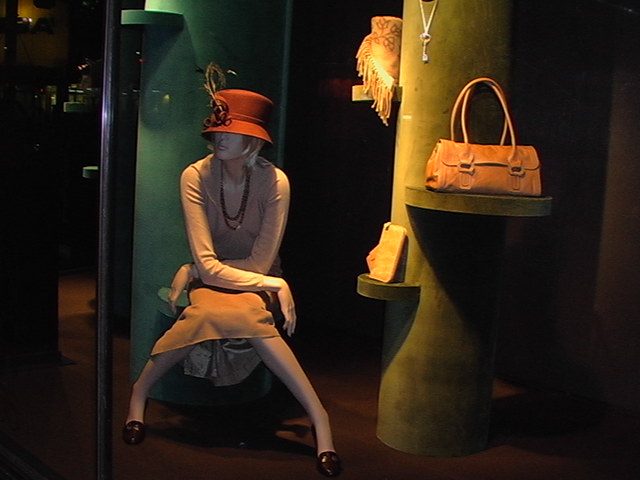
South Taranaki Museum in Patea is a wonderful place to rummage through, somewhere like your grandmother's house perhaps, where you stumble across some odd piece of technology or uncover a forgotten childhood treasure. It was a welcome dry spot on one of those days that help to produce the lush green grass for the region's dairy industry. It also led me to the fascinating Tawhiti Museum near Hawera. Between the two, a dismal day suddenly became a lot of fun. It was the sight of the Aotea Canoe floating in the rain above the main street of Patea which first attracted my attention. As kids back in the 50s and 60s we made our own fun on those weekend visits to the museum and this turned out to be just as intriguing. After a quick intro by museum volunteer and local councillor, Warwick Fry, I wandered through the rooms, marvelling at the stuff our Maori and European forebears used in their daily lives. Gramophones with trumpets, early typewriters, and antique telephones crowded the shelves, all within touching distance. The no-glass case displays continued through the Agricultural and Machinery room, where early separators and churns mixed it with horse-drawn gigs and fire trucks. Women didn't feature much in the displays so their minor presence was all the more conspicuous in the Trade and Industry room, where an antique mannequin stuck her head out of an iron lung used to help polio victims breathe at Patea Hospital in the 1950s. A harassed looking woman glared over the monthly washing in 1890. She was surrounded by instruments such as mangles, evidence of the intensely manual work of the times. Women's lives were a bit on the margins in this museum but their role was certainly clear in the court devoted to domesticity. Maori history is also a little thinner than you might expect. Maori arrived in Patea in the 14th century after navigators Turi and Rongo-Rongo found their way following directions from Kupe to look for "the river flowing towards the setting sun". In the Maori court, an unadorned fishing canoe that had been dug out of a swamp looked battered, yet solid, beneath paintings of Oriwa Haddon, the first Maori painter to show work at a Fine Arts exhibition in the capital city. Valuable cloaks, tools, and piu piu are housed behind glass in this room. But the dairy industry is certainly not forgotten. In the 1940s Patea Port was the world's largest cheese exporter and the life of the port unfolded as I strolled through a wood-panelled corridor in a simulated ship's hold accompanied by the cries of seagulls and wash of waves. Twelve portholes offered evocative glimpses into scenes from the past of a tribal settlement and once-thriving sea town. "Ooh, that one's creepy," cried a child to her mother, backing away from one porthole, where a life-size model of Skipper Barnes was busy transmitting from a ship's radio. I discovered local artist Nigel Ogle created these gems and his wonderful museum at the old Tawhiti cheese factory was the next, unexpected visit that afternoon. "You mustn't miss it," urged Warwick, so, spurred on by this fellow museum vote of confidence, I set off to Hawera and Taranaki's answer to Madame Tussauds. Tawhiti Museum was slick after Patea's olde curiosity shoppe style. A vast number of figures, made by Nigel, played out the dramas of local history in scenes of war, work and family life. The scenes are illustrated in a range of different-sized scenes, from life-size proportions to miniatures. The figures are modelled on real people and look amazingly alive. A frazzled mother in curlers holding a baby in one arm and stirring a pot with another while a toddler screamed at her apron strings brought back memories, while a chap leaping up from a long drop when the door was opened caught everyone by surprise. In other scenes, men were busy fixing cars, shearing and slaughtering sheep while women served behind counters, cooked and sewed. The Brock family rooms take visitors close up to early middle-class life at home. A kid smears her face with lipstick as the parents prepare to go out, a drawing room scene sings when you push a button and toffee spills from a child's pot in the kitchen. Maori life in the region and Kimble Bent's escape from the British Army in 1865 to live with the Hauhau tribe are also illustrated with imagination and Nigel's meticulous attention to detail in a series of dioramas. This former art teacher has turned a hobby and talent into a full-time business and has produced a hugely informative work of art that continues to grow. In Badger's Cafe next door a series of models from The Wind in the Willows illustrate scenes from the book. Musing over a cuppa and a delicious home-baked cake, I realised I should have allowed more time for Tawhiti, but that is what happens when you just follow your nose.
South Taranaki Museum in Patea is a wonderful place to rummage through, somewhere like your grandmother's house perhaps, where you stumble across some odd piece of technology or uncover a forgotten childhood treasure. It was a welcome dry spot on one of those days that help to produce the lush green grass for the region's dairy industry. It also led me to the fascinating Tawhiti Museum near Hawera. Between the two, a dismal day suddenly became a lot of fun. It was the sight of the Aotea Canoe floating in the rain above the main street of Patea which first attracted my attention. As kids back in the 50s and 60s we made our own fun on those weekend visits to the museum and this turned out to be just as intriguing. After a quick intro by museum volunteer and local councillor, Warwick Fry, I wandered through the rooms, marvelling at the stuff our Maori and European forebears used in their daily lives. Gramophones with trumpets, early typewriters, and antique telephones crowded the shelves, all within touching distance. The no-glass case displays continued through the Agricultural and Machinery room, where early separators and churns mixed it with horse-drawn gigs and fire trucks. Women didn't feature much in the displays so their minor presence was all the more conspicuous in the Trade and Industry room, where an antique mannequin stuck her head out of an iron lung used to help polio victims breathe at Patea Hospital in the 1950s. A harassed looking woman glared over the monthly washing in 1890. She was surrounded by instruments such as mangles, evidence of the intensely manual work of the times. Women's lives were a bit on the margins in this museum but their role was certainly clear in the court devoted to domesticity. Maori history is also a little thinner than you might expect. Maori arrived in Patea in the 14th century after navigators Turi and Rongo-Rongo found their way following directions from Kupe to look for "the river flowing towards the setting sun". In the Maori court, an unadorned fishing canoe that had been dug out of a swamp looked battered, yet solid, beneath paintings of Oriwa Haddon, the first Maori painter to show work at a Fine Arts exhibition in the capital city. Valuable cloaks, tools, and piu piu are housed behind glass in this room. But the dairy industry is certainly not forgotten. In the 1940s Patea Port was the world's largest cheese exporter and the life of the port unfolded as I strolled through a wood-panelled corridor in a simulated ship's hold accompanied by the cries of seagulls and wash of waves. Twelve portholes offered evocative glimpses into scenes from the past of a tribal settlement and once-thriving sea town. "Ooh, that one's creepy," cried a child to her mother, backing away from one porthole, where a life-size model of Skipper Barnes was busy transmitting from a ship's radio. I discovered local artist Nigel Ogle created these gems and his wonderful museum at the old Tawhiti cheese factory was the next, unexpected visit that afternoon. "You mustn't miss it," urged Warwick, so, spurred on by this fellow museum vote of confidence, I set off to Hawera and Taranaki's answer to Madame Tussauds. Tawhiti Museum was slick after Patea's olde curiosity shoppe style. A vast number of figures, made by Nigel, played out the dramas of local history in scenes of war, work and family life. The scenes are illustrated in a range of different-sized scenes, from life-size proportions to miniatures. The figures are modelled on real people and look amazingly alive. A frazzled mother in curlers holding a baby in one arm and stirring a pot with another while a toddler screamed at her apron strings brought back memories, while a chap leaping up from a long drop when the door was opened caught everyone by surprise. In other scenes, men were busy fixing cars, shearing and slaughtering sheep while women served behind counters, cooked and sewed. The Brock family rooms take visitors close up to early middle-class life at home. A kid smears her face with lipstick as the parents prepare to go out, a drawing room scene sings when you push a button and toffee spills from a child's pot in the kitchen. Maori life in the region and Kimble Bent's escape from the British Army in 1865 to live with the Hauhau tribe are also illustrated with imagination and Nigel's meticulous attention to detail in a series of dioramas. This former art teacher has turned a hobby and talent into a full-time business and has produced a hugely informative work of art that continues to grow. In Badger's Cafe next door a series of models from The Wind in the Willows illustrate scenes from the book. Musing over a cuppa and a delicious home-baked cake, I realised I should have allowed more time for Tawhiti, but that is what happens when you just follow your nose.
Ferdinand the bull
By Virginia Winder
Taranaki rugby mascot Ferdinand the Bull survived one fire, a goring from boar tusks, a broken back and an attack by police.
But in the end he became a victim of fashion.
It all began in the early 1950s, when Taranaki supporters decided to challenge Waikato's dairy industry icon.
An article published in a Taranaki Rugby Annual 1978-79 tells the story.
It says that in 1952, when the northern foes held the Ranfurly Shield, Mooloo the cow was the emblem of Waikato.
Murray Mitchell and Geoff Bendall built the bull in Geoff's parents garage. "We built it out of straw, number eight wire and papier mache," said Mr Mitchell.
Bovine birth
And so Ferdinand was born.
His first trip out onto Rugby Park, with Mr Mitchell as the back legs and Mr Bendall as the front, was a rainy day - not ideal for a papier mache bull.
"It was pissing down with rain - and the ground was all sloppy. Before we even got out onto the field we'd fallen over," said Mr Mitchell. "We went out and took a bow. The crowd went burko they thought it was wonderful. The guy on the microphone said 'you've heard of Mooloo - well now you've got Ferdinand
http://www.pukeariki.com/en/stories/sport/ferdinandthebull.asp
Wednesday, May 17
Let us take a few risks
For our sakes, let us take a few risks 16 May 2006
This week is Youth Week, and in the second of a five-part series featuing the opinions of young people in the district, Stuart Julian writes on issues that concern him. Youth Week aims to highlight the positive input young people make in their communities.
We are the super generation of youth. Social scientists have studied the trends of children for hundreds of years to come to this conclusion, and yet they see a flaw, a single imperfection that could quash all of the great expectations of our super-stature. We as a nation, our youth, our parents and our leaders, are turning soft.
My parents tell me stories of their childhood hardships – "back in my day . . ." I would grow tired of these pretty early and would soon learn the art of selective hearing.
Today's youth take for granted what they have got. Now I realise that with a bit of hard parenting and lack of technology, our older generations have gained not just physical toughness from climbing mountains each day, barefoot over gravel and snow, but mental toughness also.
My mother would tell me she biked from Waiwhakaiho and back – all the way from Seaview Road for every single netball game she played. In today's society, this would be regarded as an outstanding feat and would probably receive a gold medallion and a letter from the Queen herself. But she did it because it was all she knew, she didn't have her own personal car to drive wherever she pleased.
Nowadays, you would be lucky to see youth with the willpower to pry themselves away from the TV and just bike across Seaview Road.
We could argue that pure laziness is letting our New Zealand youth waste away, but there is an equally large factor. When I was a young child of eight, I was walking the 2km journey to Spotswood Primary alone. Until, of course, it was my turn to receive a large, shiny black bike for my 10th birthday, my parents thought it was good for me.
Slowly, our society has become too wrapped up in the belief that there is no way our children can make it to the dairy without being kidnapped, raped or slaughtered.
Has our world become so corrupt that we cannot let our children walk to the park – two blocks away – without parental supervision? Is it so unruly and dangerous that we should install metal detectors in pre-schools? Sure, there are a lot of bad guys out there and they have a new age of weapons in their arsenals – this in turn brings double the paranoia in parents.
But we must let our children experience risk and hardship, to condition them for the future and give them the confidence to push back when being pushed. Youth of today need to stop wasting the sunshine and get active, to play a part in this vibrant community.
Parents, to instil good habits and attitude for the future – for theirs and everybody else's sake – let your kids walk to the park every now and then – during the day of course.
STUART JULIAN is 17 years old and the chairperson of the New Plymouth District Council youth subcommittee.
The year 13 student is head boy at Spotswood College. He plans to further his education at university next year.
http://www.stuff.co.nz/stuff/dailynews/0,2106,3669100a6554,00.html
Ronald Hugh Morrieson
'We were an average group of 12 to 14 year-olds having tons of fun on our bicycles,' he says of their teenage years. 'Morrieson's most valued possession was a Rudd Whitworth, the crème de la crème of bikes. We used to ride all over the place but we never did anything nasty. We never broke letterboxes or anything like that. It was only later in life we got in trouble with the cops.'
'I drank a lot at his place,' Robinson grins. 'But not what he made. Ron used to organise the beer from the local brewery in sugar sacks that held 4 dozen big bottles of beer. OC (Octopus Clamp) was one and VC (Victoria Cross) was the other made at the Hawera Brewery. Octopus Clamp came from a hold used by wrestler Lofty Bloomfield, a hero of Ron's.'
Along with a talent for music, Morrieson honed his amateur wrestling skills. Robinson remembers a night many years down the track when Morrieson treated his old mates to a social demonstration. 'My God! What a bloody performance. He got this school teacher and gave him 'an aerial helicopter.' Lifted him up, swung him round and round and threw him down on the floor, then lifted him up on his knees and dumped him. Poor fellow, he drank a bottle of brandy that night, and the next day drove the school bus, and he had to keep stopping to have a throw-up.'
He says Morrieson was seriously into billiards and snooker and even though playing for money was illegal, he suspects his friend made 'quite a lot' off his cue. 'We used to play a lot, Ron and I. He was far better than I because he didn't work. He didn't ever have a job. He spent yonks up in that pool room.'
http://www.pukeariki.com/en/stories/arts/morriesonprank.asp
http://www.pukeariki.com/en/stories/arts/morriesongoth.asp
http://www.pukeariki.com/en/stories/arts/morriesonscare.asp
Ronald Hugh Morrieson: A BiographyJulia Millen
Writer, musician, music teacher, Morrieson was also known as a drunken bum, a wastrel, a womaniser and a spiv. He played bass in dance bands and drank in pubs around Taranaki in the 1950s and this became the material for his novels. In life, as in his remarkable literature, he was an original.
Monday, May 15

Sunday, May 14
Hotel owners looking to new options after blaze
13 May 2006
The New Commercial Hotel in Manaia could be reincarnated as a cafe-sports bar, its owners say.
The top floor of the 125-year-old hotel was destroyed by fire on Anzac Day. At the height of the fire, 32 firefighters from six brigades battled to bring it under control. An application for the renewal of the hotel's on-licence appeared in the Taranaki Daily News this week.
Owner Ian Taylor, whose family had owned the hotel for 12 years, said every effort would be made to keep the business running. "Otherwise I wouldn't have spent the money on getting a licence again. We want to reopen but unfortunately that place is now beyond being able to be used," Mr Taylor said.
"That pub won't be staying open. As from Monday or Tuesday next week, we will be starting to pull it down.
"We hope to be putting in more of a sports-type bar or a cafe-type sports bar and as things change in the town, we will move with it."
He had already made an appointment with a designer to draw up plans for a new building but was playing the waiting game with the insurance company.
"Once it is down on the ground then the insurance company and us will be discussing things more.
"But then at that stage it all depends on whether it comes under the insurance company's criteria, whether the insurance company covers the costs," Mr Taylor said.
The new building would be single storey with manager's accommodation out the back, he said.
There were a number of reasons why they wanted to keep the hotel running.
"We have lived in Manaia for quite a few years and we like Manaia. We don't like the idea of there being only one pub in the town and we like the idea of still running a hotel.
"We are also doing it for our cliental and the people in the town," he said.
Friday, May 12
Spring Clean

SPRING CLEAN: Hawera's Handyman Barn, which has used house fittings piled in front of the shop front.RICHARD WOODD/Taranaki Daily News
C C Ward
Landmark NP store takes scissors to fabric section.11 May 2006
By MICHELLE SUTTONNew Plymouth department store CC Ward is cutting its fabric business.
The landmark store, which opened in 1891 and is renowned for stocking high-quality material, is phasing out its fabric department.
The children's clothing department will also close at the end of the season.
CC Ward owner Roslyn Holyoake said the two departments were closing because the store was too small to fit everything in.
Fourteen years ago, CC Ward stocked furnishings, but that was relocated because of a lack of space and later sold.
"Today we are faced with the same problem. The physical size of the store is too small to cater for the number of product lines we do."
The decision is in line with department stores Smith and Caugheys, in Auckland, and Kirkcaldie & Stains, in Wellington, which both dropped their fabric departments several years ago.
The extra space from the fabric section would be used to expand the bridal department, in particular ready-made bridal dresses.
"All of our departments need to be more specialised. Our bridal department, 10 years ago, never had a ready-made dress and today there are over 1300 dresses in that department."
New Plymouth sewing tutor Jenny Major said shoppers from around the country travelled to CC Ward because of the quality fabric.
"It's possibly a sign of the times because less people have time to sew these days, but having said that I have 80-90 students a week in our sewing classes."
The closure of the store's fabric department would make it difficult to find top-end fabrics in Taranaki, she said.
The weekly sewing classes, previously at CC Ward, would continue at Spotlight Stores in New Plymouth from term 3 in mid-July.
Wednesday, May 10
Goreme Restaurant -
http://www.geocities.com/goremerestaurant/ Where Wendy is currently - working on this website
Tuesday, May 2
NZ History
http://www.nzhistory.net.nz/handsonhistory This section of NZHistory.net.nz is to assist anyone who is researching, writing or teaching New Zealand history
The Classroom
NZ History Calendar
Events in New Zealand history throughout the year. Each day's event is displayed on the NZHistory.net.nz homepage. The week's events are also displayed in The Classroom.
Discuss NZ history
Ask questions or discuss New Zealand history topics. You have to register to post to the forum, but anyone can read what others have said.
Oral history guide
Learn how to prepare, record and process oral history interviews.
Genealogy Links
Taranaki Movies
The Film Archive and Friends of the Eltham Town Hall proudly present Taranaki on Film, a selection of films made between 1912 and 1962.
Piano accompaniment by Paul Adams.
Scenes in Taranaki, New Zealand 1912Early newsreel showing oil exploration and scenic spots including Pukekura Park.Mt. Egmont, 1935 Scenic film of Taranaki and Mt Egmont, produced by the Government Publicity Office.King's Cinema Review, Park Day April 1, 1929A local newsreel showing activities at Park Day, Victoria Park, Stratford. These include a drill display by High School students, a brass band and "Bert" Vinsens Circus. Other scenes of Mt Taranaki, and trampers and skiers. Produced by Burgess - Threipland.A&P Show Hawera or Eltham, 1940 Filmed by Courtney Edgecombe, photographer from Hawera.Wedding, Elthanm Women's Institute, 1950Home movie madeby Courtney Edgecombe on his 8mm camera.Delivering Trams to Eltham, 1954New Plymouth film maker Caleb Wyatt, documented the trams move to new homes on farms in Eltham. Refloating of the Calm, 1956 (extract) The steamer Calm ran aground on Saturday 14 July 1956 at Waiweranui Point, near the Cape Egmont lighthouse. Salvage attempts eventually succeeded and Calm returned to New Plymouth. Five hundred spectators gathered on the wharf to cheer her arrival. Filmed by Caleb Wyatt.Eltham - Egmont August 1962Home movie made by RG Finn. The Finn family from Te Awamutu experience the snow on Taranaki. The children ride sleds down the mountain. Last scene is the family grouped outside the Eltham District Library.
This short programme will be followed by the video Official Opening of the Refurbished Eltham Town Hall, produced by The Friends of the Eltham Town Hall in conjunction with the South Taranaki District Council.
Saturday, April 29
Manaia Hotel
Inferno destroys Taranaki hotel
26.04.06 9.00am
A fire destroyed the New Commercial Hotel in Manaia, Taranaki, last night. The Fire Service was told of the blaze about 9.15 and seven appliances with volunteer crews rushed from New Plymouth, Eltham, Kaponga, Hawera, Manaia and nearby Okaiawa. A Fire Service spokesman said all guests and staff had got out safely. "The hotel is a total write-off." The cause of the blaze had yet to be established.
Friday, April 28
Club Bizarre
http://www.clubbizarre.co.nz/aboutcb/events.php
Club Bizarre (and its predecessor-Maximum Ego Productions) have been putting together events and gigs since the mid eighties clocking up quite an impressive back catalog of dates. Below are some of these dates. We havent listed EVERY gig, just the nights that stood out or the ones we could remember. Just click onto the event name to see photographs, gig flyers, reviews, tickets, sticker art and much much more!
Club Bizarre (and its predecessor-Maximum Ego Productions) have been putting together events and gigs since the mid eighties clocking up quite an impressive back catalog of dates. Below are some of these dates. We havent listed EVERY gig, just the nights that stood out or the ones we could remember. Just click onto the event name to see photographs, gig flyers, reviews, tickets, sticker art and much much more!
MAORI SHOW BANDS FROM THE 60's
http://homepages.ihug.co.nz/~mstowers/id47.htm TE PAPA MUSEUM LAUNCHES THE MAORI SHOWBANDS WEBSITE!!
http://www.maorishowbands.co.nz
Some of the great Maori Show Bands from the 50's & 60's set a precedence and paved the way for New Zealand music and were an important part of New Zealand's musical history. While they have yet to be fully recognised and appreciated for their talents and contribution to NZ Music, these pages are for the showband members themselves to share memories, tell their own stories and share it with the rest of the world. A meeting place where they can get together and reminisce.
Bits and Pieces of Auckland
Royal and Central Grill Rooms around the top of Victoria St ( after 6 o’clock closing)
the Hi Diddle Griddle, Gourmet and El Matador.
Tommy had been in Sea Of Tranquility before forming a short-lived jazz group called The Adderley Walker Movement with pianist Mike Walker. They played at the El Matador nightclub in Auckland and released one single in 1970 called 'Hooray For The Salvation Army'/'Does Anybody Know What Time It Is?'.
... Who on here remembers the dances at the Orange? And there was that restaurant El Matador just up the hill and around the corner in Symonds St. ... http://www.realwomen.co.nz/
..the Orange Ballroom is still on Newton Road, Auckland, significantly at the opposite end of Newton Road to the Irish Society.
It is not a commercial Ballroom anymore but I think it can still be hired out for 'functions.' And
..the Orange Lodge Ballroom is on Newton Road, opposite St Benedicts Street and just a short walk from the PowerStation.
Tuesday, April 25

Who remembers all the jets when we were at Hawera Main

The days of playing non stop cricket and softball on the fields.

Sunday, April 23


Mystic on the Road again
Mystik on the road again 23 April 2006
by ELLEN DAVIES The Nesian Mystik boys have been busy in the three years since their debut album Polysaturated entered the charts at the No 1 spot.
Two members of the band have become fathers, one has a baby on the way and singer Te Awanui Reeder has completed a business degree.
Things have changed in three years - and that couldn't help but be reflected in the music of their new album Freshmen, Reeder tells Sunday News.
And the band feels more ready to deal with success the second time around.
"Three years ago, we didn't know what to expect," says 22-year-old Reeder.
"We also didn't know this industry. We were quite naive. In saying that, I think that was good for us.
"We thought we were invincible and now we still do but we are a lot more straight up.
"We have always been straight up with each other ?now we are straight up with anybody.
"We are realistic in that we like our music but it?s business as well."
Reeder and his bandmates Donald McNulty, Junior Rikiau, David Atai, Feleti Strickson-Pua and Heath Manakau formed Nesian Mystik back in 1999 when they were still students at Auckland's Western Springs College.
Polysaturated spawned the hits It's On, Nesian Style, For The People, Unity and Brothaz.
Waiting three years after Polysaturated to release Freshmen was a conscious decision for the Nesians, who are all now in their early twenties.
"We knew there was going to be so much pressure," Reeder says. "That, and every second album we've seen has been kind of stink to be honest - it hasn't been as good.
"It's like the movies - you like the first one and you see the second one and think, 'Why did you make it?"
"We are pretty happy, we are very proud of this album. Musically, it kills the first one. The production is so much better and the structure of songs is better."
Bless your cotton socks
Bless your cotton socks 20 April 2006
By ANDY MORRIS
INTERNET EXCLUSIVE COLUMN One of the first journalists I worked with made it his personal mission to replace swear-words with the likes of "breadstick" and "cotton socks".
He lived a double life. By day a mild-mannered sub-editor - by night the even milder-mannered founder and secretary of The Polite Society.
The group was formed to encourage better behaviour in Britain.
Ian Gregory set it up after several of his friends returned from holidays abroad - including New Zealand - saying how polite everyone in other countries were, and how badly the UK fared in comparison.
Some 19 years later that contrast between Britain and New Zealand seems even greater. So I say thanks, New Zealand, for the politeness and friendliness which you seem to take for granted but which just isn't the rule elsewhere.
I became an immigrant in January, though it took me a few weeks to learn how to pronounce my new title - "Pakeha".
Nobody at PAK'nSAVE knows I am a newbie. The guy behind the counter at the dairy has no idea I'm judging each encounter, looking to reassure myself I've done the right thing in moving halfway round the world.
In short, nobody's trying hard for my benefit.
Must be that this is how you are most of the time.
I've seen people give up train seats for pregnant women - without being asked. Half the people on my bus in the morning thank the driver when they get off.
Isn't that incredible? No, that's just the thing - you guys don't think it is.
The best thing of all is the behaviour of kids.
At my two boys' schools in the UK, talking in class and disrespecting the teacher was the norm.
Thankfully at Avondale College (and they deserve to be recognised) the teachers have put my kids straight - you do things differently over here.
Well done, I shall be sending the Polite Society a report. I tell you, I'm breadsticking glad I came. http://www.stuff.co.nz/stuff/sundaynews/0,2106,3642969a15596,00.html
How Th' Dudes Got Started
Should you ask me to put a date on when Th' Dudes began, I'd point to a Saturday afternoon sometime early in the Auckland summer of 1975. If the past is a foreign country, then New Zealand in the 1970s was another fucking planet. When the world ended, the joke went, we'd be OK because everything here happened five years late.
We were isolated, protected colonials. We pledged unquestioning allegiance to Great Britain and played "God Save the Queen" in the cinemas at 11, 2, 5 and 8 every day except Sunday, when the country was shut. After the anthem and before the main feature there'd be a National Film Unit short about P Class locomotives or touring the central North Island by Austin Allegro. A Clockwork Orange carried an R20 certificate. Ulysses was screened to sexually segregated audiences, lest Joyce inflame the senses and cause spontaneous public coupling.
For entertainment that went beyond the local booze barn, the Ace of Clubs featured Diamond Lil and Marcus Craig. The Pink Pussycat had girls "in g-strings only" (according to the ads). His Majesty's Theatre (does your blood still boil when you see the carpark it became?) and the St James hosted shows "direct from the West End": local-girl-made-good Nyree Dawn Porter in Charlie Girl; Peter Cook, Dudley Moore, Alan Bennett & Jonathon Miller reunited for Behind the Fridge; ooh-you-are-awful Danny La Rue and slapstick Norman Wisdom - though Wisdom did not prevail and went home after two nights of empty seats. The stage production of Hair came, and was put on trial for obscenity. Germaine Greer came, said "bullshit" in public, and was put on trial for obscenity. Our nanny justice system was determined to do the thinking for us. We could have been the laughing stock of the world, if only the world would notice us.
Tommy Adderly's club, Grandpa's, was nearing the end of its blues-wailin' life. The Inbetweens played at Aladdin's, Steampacket at Your Father's Mustache, Dalvanius at Cleopatra's out east in the shadow of Mount Wellington, on the edge of civilization. Woe betide you if you tried to get into any of these places wearing jeans, though if you said they were "dress jeans" you could get lucky. Draconian licensing laws meant many clubs - like Maurice Greer's Crofts in Airedale Street - served soft drinks only. It's hard to believe that grown adults would go out for an evening's entertainment without the chance of getting wildly pissed. There'd be a drop of the real stuff under the counter though, if you knew how to ask.
Television One and South Pacific Television, both state-owned but programmed to offer the pretence of competition, transmitted from 2pm daily and closed down well before midnight . Entire families would gather at 8pm each Saturday to watch the pinnacle of the week's broadcasting: Des O'Connor, Morecambe and Wise, the Seekers, the Two Ronnies, or the innocent and spectacularly popular Black and White Minstrel Show. Sunday nights provided a musical lifeline to the outside world as Dr Rock - Barry Jenkins - presented the Grunt Machine and Radio With Pictures, flashing us images of the birth of punk and the music video revolution two decades before MTV made it to these distant shores. The biggest selling colour television set on the market, the Philips K9, cost NZ$999, about twenty times the average weekly wage. There was no "reality" or "bloopers" tv, and the announcers just announced and the newsreaders just read news. Radio Hauraki - far superior to the NZBC's 1ZM - was the only radio station worth listening to. On Saturday mornings they had American Top 40 beaming in Dr John and Marvin Gaye with Casey Kasem exhorting us to keep our feet on the ground and keep reaching for the stars. There were no "classic hits" or "easy listening" or "news-talk" stations, and the disc jockeys played what they wanted to play, knew something about music, and didn't have the sense of humour of your average snickering 13 year old schoolboy.
A cafe was a place where stonking great portions of bacon and eggs and baked beans were piled on thick, buttered white toast and washed down with Choysa tea and instant coffee. A coffee lounge was slightly more refined and offered savouries and sandwiches and scones and lamingtons, with more Choysa tea and instant coffee. Fish and chips was the staple takeaway. McDonalds and Kentucky Fried Chicken were rare and extravagent novelties, watched warily by the neighbourhood burger bar. The few restaurants around were for special occasions only: the Hungry Horse, Hagan's, El Matador, El Trovador. At the Tai Tung in Wyndham Street you had to book weeks in advance and could still wait an hour for your table. Local wine was thin and sweet: Cook's Chasseur, Blenheimer, Cold Duck, Marque Vue. Imported wine was scarce and expensive.
We drove Hillmans, Holdens, Fords and Austins. The occasional Toyota or battered Datsun drew curious glances. Buying a new car - perhaps an HQ Holden "with distinctive W-shaped front" - required something mysterious called "overseas funds". Panelbeaters flashed neon hammers and glittering sequinned signs. "Drive With Care Or You'll End Up Here", warned the wreckers at the top of Newton Road.
There were tariffs and controls on everything imported. In shops the range of goods was slim and the prices high. Clothes, furniture, appliances, electronics, hardware, toys: if you could get them at all they would cost you two, three, four times as much as in their country of origin. Things manufactured here by our protected industries were usually of poor quality, hence our still-persistent belief that offshore is better.
Fruit and vegetables though were big and cheap: Golden Delicious apples and Packham pears, plums and apricots from Marlborough and Hawke's Bay , oranges from Kerikeri, watermelons and crates of Golden Queen peaches from the Henderson orchards. Dairy products were cheap too of course: four cents for a pint of milk, twenty-five cents for a half pound of butter. All the best meat was sent to Mother England, but the leftovers were affordable and plentiful and many a suburban chest freezer held half a beast.
But better do your shopping before the weekend arrived. After 9 o'clock on Friday night there was nothing open but the corner dairy, selling goods at premium prices. Many people dreamed of owning a dairy for a few years and retiring on the profits. "A little goldmine", my dad said.
Businessmen wore locally-made Cambridge suits and Summit Viyella shirts. In summer office-workers, plain-clothes policemen and All Blacks in mufti switched to too-tight walk shorts and walk socks, a local fashion aberration that brought to mind hairy-legged sixth formers. Crimplene, seer-sucker and velour were big. Ladies' fashions filtered slowly south of the equator, arriving a season or two after their northern debut: the culotte, the trouser suit, the maxi dress. Hippies, beads, kaftans, incense and love oil thrived at Cook Street Market.
There was no fresh fruit juice, no low-fat milk, no flavoured milk, no soy milk. No energy drinks or smart drinks. No light beer, no boutique beer. No short blacks or flat whites. No one-day cricket, no Black Caps or All Whites or Silver Ferns, no aerobics, no sportswear-as-fashion, no sports-shoes-as-streetwear. No traffic jams. No video games, video players, or videos. No compact discs, DVDs, laser discs, or laser light shows. No fax machines or filofaxes, no cell-phones or phone cards. No personal computers or desktop computers or laptop computers or palmtop computers. No Internet, Intranet, World Wide Web, or email.
There was no GST, no CER, no ATM, no EFTPOS. If you wanted money for the weekend you had to remember to go to the bank and cash a cheque before 3pm on Friday. No one- or two-dollar coins, no fifty dollar notes. To buy foreign currency you had to present your passport and airline ticket as proof of travel.
There was no Prozac, no Viagra, no Ecstacy, no AIDS, no herpes.
No hole inthe ozone layer...
And on this balmy Saturday afternoon in late 1975, Dave Dobbyn, Peter Urlich, Peter "Nyolls" Coleman and I were gathered - as usual - in Nyolls's grandmother's basement in Greenlane. We were "getting a band together". Dave, Peter U and I had known each other since form one at Sacred Heart College in 1968, laughing at Milligan and Sellers and Cleese, passing notes in sex ed class, and blanking out the wretchedness of canings and new maths and Latin verbs with a love of music and a heightened sense of the absurd.
I'd come from England in 1966, aged 9. Wild colonial New Zealand was all a bit of a shock after the sandals and socks and shy reserve of the Old Country. I had trouble fitting in to this bare feet and beer jugs place. I did have a guitar though, and an older sister who - back in England - had exposed me early on in life to the wonders of pop music: the overwhelming magic of Beatlemania, the depravity of the Stones. Radio Caroline and Top of the Pops and Ready, Steady Go: I was hooked on the soundscape of the three-minute wonder. Tennis racquet as guitar? I was that cliché.
Peter Urlich was a living light entertainment show in himself. He could grease up the teachers yet still spit with the bad boys at the back of the class. And a sharp dresser: even then he was the sort of guy who could play a hard rugby match in a hurricane and still look like he'd come straight from the dry-cleaners via the hairdressers. Together we harboured a dream: that one day we'd be like Mick and Keef, or Bowie and Ronson, or Daltrey and Townshend.
I knew I was going to be friends with Dave on our first day at SHC. When he walked into class late, wearing a too-large hand-me-down uniform and a savage crewcut courtesy of his mother's kitchen shears, I recognised a fellow loner. I see him still: ginger on porcelain swaddled in a tent of navy blue. He was picked on and put upon all through school and found solace in his guitar. At lunch-time a sport-hating half dozen of us would gather in the hall or a music room, banging away on guitars. While the others were diddling around with Simon & Garfunkel, Dave would stonk into some riff-driven Neil Young. When Abbey Road was released and everyone was trying to plinkety-plink their way through "Here Comes the Sun" Dave impressed upon me the blackfoot boogie of "Come Together". He and I lived for the days when Mr Gannaway, the music master, brought his electric organ to class and played the Peddlars' "Girlie" with wah wah and everything. Together, Dave and I would jam for hours on endless Santana riffs. We'd yell "fuck the neighbours!" along with the Small Faces. We'd pound out the entire bridge of "Something in the Air" on an out of tune piano. There was never - praise be - a scrap of formal shape to his music; he's probably never read a chord chart in his life. If my guitar playing was ordered progression; his was a tumbling, swirling cloud.
Nyolls came to SHC from the Waikato in third form to work hard and pass exams, but when he wasn't studying or breaking both legs skiing he'd be sitting around with a bunch of guitar-strumming boarders, all plinking and tinkering away at Cat Stevens songs, easing the misery of life far from the farm. Despite Cat, Nyolls was sensible enough to realise - even at that early age - that the Guess Who could never be cool. And sensible enough to realise that becoming a doctor would most likely be a more prudent career choice than playing the bass guitar. He would eventually leave the band to explore his own personal Hippocratic frontier, and in his place we pulled in someone we'd had our eye on for a while. Peter White had been playing in bands for - ooh, ages. Over a year. And he'd even managed to grow a slight beard. He played a solid and melodic bass, like his heroes McCartney and Entwhistle. His Jewishness and deadpan humour were perfect foils for our arrogant, tight-arsed Catholicism. His high kicks alone could provoke hours of scoff and counter-scoff. The only thing really wrong was his name: we felt we couldn't have yet another Peter, so we shortened his middle name and - whether he liked it or not - made him Lez.
Anyway, this afternoon here we were with our Teisco and Jansen guitars and some fuse-blowing, shock-giving amps made by a bearded valve-nerd in Forest Hills. Also an endless supply of Krispie biscuits and L&P. A year out of school and still chemistry-class daydreaming of Fender Twin Reverbs and Telecaster basses, Shure microphones and JBL K120 speakers, Ludwig drums and WEM Copycats. The Stones and Little Feat and Ziggy Stardust. Playing at Madison Square Garden and the Hammersmith Odeon and the Marquee Club. Recording at Strawberry Studios and Mussel Shoals and Abbey Road and the Manor, produced and engineered by Glyn Johns and Ken Scott and George Martin and Bill Szymszyck. Day-glo posters, album liner notes, Creem and NME, Lester Bangs, Charles Shaar Murray and Nick Kent. Just for now though we'd settle for the sniff of a chance to get up and play at the Glendowie Tennis Club annual dance.
For some weeks we'd been honing a repertoire of other people's songs, the songs that had inspired us. Some of them we could play passably well, some were a shambolic lurch, and some would always remain beyond our ill-timed and out-of-tune grasp. No-one could say we weren't eclectic. We explored the rhythm and blues of Chuck Berry, the Stones, the James Gang and Little Feat. Funk from the Commodores and the Average White Band. The perfect pop of Mott the Hoople, Bowie and T-Rex. Wildly ambitious covers of 10CC and Steely Dan, trying to recreate on a Saturday afternoon with two guitars what Godley and Creme and Becker and Fagen had taken a year and several million dollars to achieve.
There was but one thing holding us back, we reckoned: we had no drummer. Today we'd advertised for one in the Herald. Three people answered.
The first guy was ancient - twenty-five at least - and wore the ubiquitous leather jacket of the aged. He pulled up in an Anglia van and unloaded case after case of Tama gear, which wasn't exactly Ludwig but there was a lot of it. Once he'd set it all up though, he played with a skippy little beat that reminded me of shiny suits and saxophone sections. He paradiddled and mummadaddad his way around the edges of the songs. He looked blank when we mentioned Keith Moon and Charlie Watts. Tama.
The next auditioner was more our own age and had at least heard of Ringo Starr and even the Prairie Prince, but his kit was a mish-mash of put-together parts. His pants, however, were fashionably high-waisted with huge flared legs. Peter counted in "Blue Suede Shoes". The guy got the stops OK, but when we hit the chorus it sounded like a split bag of King Edwards tumbling down the cellar stairs. We staggered on for a few more seconds. Strictly a play-in-the-bedroom man.
Finally a yellow Toyota Corolla station wagon reversed down the drive. A Japanese car was unusual in itself. Looked like it cost a few grand. Had a tow bar. Certainly a step up from my hundred dollar Humber 80. The driver had bad hair, neither short enough nor long enough, and bad jeans with creases in the front. Bruce, he said, and certainly looked like one. Bruce Hambling. He set up a Premier kit - about midway between Tama and Ludwig in our estimation - all polished and tidy.
We decided to skip "Blue Suede Shoes". Instead, Dave started the riff to "Alright Now". Bruce raised his meaty arms. Clenched in his carpenter fists were small tree trunks. The thick varnish on them glinted in the exotic half-light of the fly-spotted fluorescent over the pool table. Through an L&P-induced haze I watched as they hammered down towards drum and cymbal.
In the explosion on beat one of bar five, a new universe was created. I took on a dazed expression of bliss, like a tummy-scratched labrador. The music took shape and hovered over us with electrified, uncontrollable life. A heaving Frankenstein's monster of noise created from the darkest parts of our individual souls. I came close to almost believing there could possibly be a remote chance that there might be some sort of God somewhere.
Either that or I'd eaten too many Krispies.
Saturday, April 22
Despite my protest -

His comments were - Look at my torch - what does that say!!! Well, that's a trick... At the front of the cars was this other sign... Totally missed by me... Oh well, they can work for their money,,,
This was a costly place to park at night

$40 was the fine - It looked an okay place to park in Auckland City. At 1 pm the parking warden was still there - to observe my reaction! He had given me a ticket at 10.30pm.. So what was he doing for 2.5 hours! I bet his name was DICK
$5 Meal Deal in Wairoa -

We were broke - no cash - 2 spring rolls, 2 wontons, 2 fish, 2 potato fritters and chips. How do they make a profit
Poppy Day
 Anzac poppies could be made overseas
22.04.06 1.00pm
A plan by the Returned Services Association (RSA) to put its poppy-making out to tender could see Anzac Day poppies made overseas. RSA president Pat Herbert told The Press newspaper the matter would be discussed in November at the RSA national council meeting. The Christchurch RSA makes about a million poppies each year -- a role they have carried out for the past 30 years. The proposal was motivated by the need to save money through the manufacturing process, which could then be spent on the welfare of returned service people. Christchurch RSA president John Suttie told the newspaper only a low labour-cost country like China could do the job cheaper. "We are running a business and it's difficult. We have run out of volunteers and we have to pay people to do it and pay the adult wage." Mr Suttie said he did not know how the public would feel about buying poppies made in a sweatshop. The paper for the poppies is currently imported from Taiwan and the plastic components are made in Christchurch. The poppies are assembled mainly by a sheltered workshop in Christchurch run by Kilmarnock Enterprises. - NZPA
New Zealand Armed Forces Memorial Project
This project has two primary aims
A To photograph and collect a pictorial record of New Zealand war graves and memorials both overseas and in New Zealand to commemorate those servicemen and women who gave their lives in the service of their country.
B To collect photos and stories not only of those who lost their lives, but also of those who came home. Generation by generation stories and old photo's are being lost to us. Our aim is to record as many photos and stories as we can while those who remember can help us to provide an accurate online resource.
We are currently completing paper work to have the project registered as a Charitable Trust.
We need volunteers to photograph graves and memorials.
We want YOUR stories, photographs and details for inclusion on the site.
Can you help us with information/history on individual units, ships, squadrons etc.?
How to submitWe have an on-line guide for volunteers and those wishing to submit information on our How to page. Please visit this link if you want to contribute to the site or if you want to volunteer to take photos of the graves and memorials in New Zealand or overseas.
http://www.nzafmp.org/
Thursday, April 20
Hawera Cinema
Three groups interested in buying Hawera cinema 20 April 2006
By RICHARD WOODDThree parties have registered interest in buying Hawera's Cinema 2 from the local owners.
Two are from outside Taranaki and one of them would keep the cinema going. The other would remove the cinema and use the building for other commercial purposes.
The third party is a local group that hopes to establish a community trust to take over and operate the cinema.
In February, the 50 shareholders invited a trust purchase to save the cinema from closure, saying they were not prepared to continue bearing the financial losses.
"All parties have inspected the assets and we've had directors' meetings, but nobody has made an offer yet, so anything could happen," chairman of directors Graeme Champion said.
He said the directors were hoping to have a clear decision made by the end of April or early May, but were prepared to extend the negotiating period if requested.
A shareholders' meeting would be called to consider the directors' recommendations.
Ivan Jones
Petrol head heaven as truck racer farewelled
19 April 2006
By RICHARD WOODD
Hawera has never seen a funeral like yesterday's, when they buried Ivan Jones.
Nearly 1000 people, mainly from hot rodding, drag racing and engineering circles, descended on the JD Hickman warehouse, the only place big enough to stage it.
The coffin came in aboard Ivan's shiny black racetruck, the 565 cubic inch V8 thundering from header pipes, competing with the poignant lyrics of Don McLean's American Pie.
His black helmet sat on the coffin, beside a figurine of Ivan clutching his legendary spud cannon. It was made by Nigel Ogle and given to him on his 50th birthday, after the cannon blew up and nearly killed him when he tried to fire it with oxy-acetylene gas for a bigger bang.
Projected on a big screen were images of Ivan racing, shooting his arsenal of guns, hunting and fishing. Hot rodders made up a convoy of V8 rods and muscle cars for the occasion.
The service was non-religious, with no prayers or singing but lots of music, stories and tributes. Ivan went to such a funeral four years ago and told his mate Geoff Furborough who conducted it: "That's the kind of funeral I'd like. You're in charge."
Three months later, Ivan was diagnosed as having a malignant tumour on his spine and died on Good Friday, after a lengthy illness, aged 57.
"It would be hard to get a welding job done in South Taranaki today," quipped MC Mr Furborough.
He said Ivan was a man who lived hard and played hard, always on the edge. He'd known him 36 years and they only ever talked about guns, horsepower, explosives, engineering and politics.
There were tributes from Ivan's three daughters Nicola, Megan and Carla, his partner Sheryl (his wife Maria died in the Ansett Dash 8 aircrash near Palmerston North in 1995), brother Trevor, Egmont Rod and Custom Club president Hamish Hiestand, fellow petrolhead John Rae, and business partner Steven (Scotty) Landsborough (who is now the sole owner of Ivan Jones Engineering).
Ivan and Scotty built the 1100hp racetruck during the past three years. It was said to be the fastest street legal ute in the Southern Hemisphere. Ivan's best drag run was 9.49 seconds at 240km/h. He was wheelchair bound when he raced the truck at Meremere last month.
Two weeks ago, he competed in the Wanganui drags (in winning form) and was planning another run at Meremere this weekend, but picked up a virus and never left Te Rangimarie Hospice. "I don't know what we're going to do with the truck, to be honest. We talked about burying it with him, but the engine's too good for that," Scotty said.
* RICHARD WOODD is based in Hawera. Ph 06 278 1718 or 027 655 3446, or e-mail dailynews.hawera@tnl.co.nz
Newton King
Granddaughter pushes plan for memorial 19 April 2006
By ROCHELLE WESTA memorial to pioneering Taranaki businessman Newton King is planned for New Plymouth.
But just what kind of tribute and where it will be placed is uncertain.
King's granddaughter, Adrienne Tatham, said yesterday that she had been contacted by various people about erecting some kind of memorial to her grandfather, who set up a Taranaki stock and station agency that bore his name.
"I think it should be done. There are quite a few memorials around the place for lesser people. Newton King did a lot for Taranaki. He helped the farming community get on its feet. He was a good businessman. Times were tough and he would keep people going who were not in the money.
"Throughout Taranaki he made his mark, and many older folk still talk about the help he gave them," she said.
King died in 1927, aged 72.
One of New Plymouth's most loved parks – Brooklands – was a gift from King, in lieu of an unpaid bequest. When King died, he left E10,000 for parks and reserves in the city. But because all of King's money was tied up in his business, buildings and in land, the trustees discovered there was not enough cash to give the city.
His family, therefore, decided to give King's 21.5ha property and house. The two-storey, five-bedroom home, overlooking what was to become the Bowl of Brooklands, was later demolished.
Mrs Tatham said that, while Brooklands Park could be a location for a memorial, there were other possibilities.
"Some memorial ideas already suggested to me include a statue centrally located within New Plymouth. His offices were situated where Centre City is now in place.
"Perhaps another idea to consider would be to name the Huatoki development after him, especially as it is so close to King's Building, which he built," said Mrs Tatham, who has written a letter to Mayor Peter Tennent and councillors about the memorial idea.
New Plymouth deputy mayor Lynn Bublitz, who is the chairman of the Huatoki development working party, said a memorial for Newton King was a good idea.
"Newton King played a very important role in early New Plymouth. I think it's important that we recognise these pioneers in a formal way.
"Whether that memorial be the Huatoki development named in his honour, that's one of the things we could consider," Mr Bublitz said. »PRINTABLE VERSION »SUBSCRIBE TO FREE HEADLINES »SUBSCRIBE TO ARCHIVESTUFF
Saturday, April 15

DJ Captain Starlite
Catering for a vegan at Christmas dinner would probably be enough to cause heart palpitations in the average omnivore. Not so for self-taught Birkenhead chef Colin Sky, who is organising a Christmas feast for up to 50 vegans on December 18, at Blissful Foods in Mt Albert.
Colin has been vegan for more than three years, and had been vegetarian for six years before that. He is well-known as DJ Captain Starlite, and also teaches vegan cooking classes. Many of Blissful Foods’ mock meats (made from wheat protein and soy protein) will be included in the banquet, whose preparation will be a combined effort led by Colin.
He calls veganism “the beautiful diet”, because of its beneficial effects on animals, human health and the environment.
“Christmas is a time of peace and love, so what better way to celebrate than with the lovely people from the vegan community, sharing a sumptuous meal completely made from plant products?” he says.
“A lot of non-vegans seem to think that the vegan diet is dull and monotonous – this menu should prove that vegans aren’t missing out on anything!”
Captain Starlite - suitcase of 45s for sale Avondale Flea Market

Remember Captain Starlite?
04 May 04
Started in 1978... still partying, you may have had the joy of Captain Starlite spinning the hits at your blue light disco back in the day.
17:52 · 04 May 04
Captain Starlite did our primary school disco's he was so cool with his fluro track suits and fluro van hehe...

Saturday, April 8


Thursday, April 6
Ohura House and chimney

19. Ohura Ohura township is 10km off the main trail. The township has declined since the closure of the coal mines.
http://www.windwand.co.nz/heritagetrail.htm
Ohura General Store

30.07.05By Nicola Boyes
A solitary Coca-Cola sign on the footpath of a little town nestled against the rugged King Country hills signals the last commercial venture in a main street abandoned, where the shop windows offer nothing but your reflection. This is Ohura, 35km off State Highway 4, heading towards Taumarunui. Even the people who make their homes in this town, part of Ruapehu District, say it is "dead". Their opinion is backed by a survey released by KPMG this week which shows that in the past 12 months Ruapehu has lost 3.5 per cent of its population, making it the biggest "loser of people" in the country. Ohura was once a bustling little town famous for coal mining. It had a high school, farming stores, markets - even a picture theatre. Now it is famous for its prison and even that will close in November. A Cosmopolitan Club, a dairy and a primary school will be all that is left, but residents say even the dairy may be under threat after years of making money from prisoners using it to stock up on cigarettes and supplies. The survey says 500 people have moved out of Ruapehu District in the 12 months to June last year. Ruapehu Mayor Sue Morris disputes the figures, saying people are moving into the district from overseas and the bigger cities. She says school rolls are not dropping. The district is moving ahead. "We've got people coming into the area. The houses are being sold. You're lucky if you can get a house." Mayor Morris says coal mining is set to take off again in Ohura with an Australian company seeking resource consents. But residents in the town are dubious. "It's just dead," says Ohura resident and fire chief Gary Holmes. "Even Taumarunui, that's dying I reckon. They've lost the [meat] works [Affco]. All the railways have gone, shops are empty. It's quite amazing. It is dying." Ruapehu District encompasses Taumarunui to Waiouru, and borders Te Kuiti. Mr Holmes has lived in Ohura all his life, 50 years. He has struggled to maintain the volunteer fire brigade - essential when it takes a brigade from Taumarunui an hour to get to Ohura - and the district's ambulance service. He says the closure of the prison will not affect Ohura any more, because people have already gone, the older folk moving to centres where health care is available and they don't have to wait for the doctor to visit every Monday. "She's a ghost town all right," says resident Rob Craw. "There is still the farming community, but the town is dead." Bruce Stevenson has lived in Ohura since 1987, when his wife, Doreen, and children Bonny and Holly took over a house earmarked for demolition and made it into their home. It's Government centralising things which is emptying small rural towns, he says. A tui twitters in a nearby camellia bush and Mr Stevenson says, "See, you can hear the birds. There's no traffic noise. It's peaceful." He has no plans to move. Sandra MacKenzie and her husband, Trevor, moved here seven years ago, when the Affco freezing works in Taumarunui closed and he was made redundant. He started up as a prison officer at Ohura Prison; now that's closing. "We have a freehold house here. It cost us $5000. What are we going to do?" Sandra MacKenzie asks. About 16km back towards Taumarunui is Matiere - once another little service town. All that remains there is the cosmopolitan club. Jim Hepi and his wife, Edith, have lived there for 16 years, their horses tethered on the roadside opposite a derelict shop with broken car bodies. Standing beside the four pigs he hunted that morning in the Ohura valley, Mr Hepi says he is a "rural" sort of guy and that he would live nowhere else. It is sad to see the smaller towns die out, he says, but when the businesses go there is no reason for people to stay. Ruapehu's opposite, the fastest-growing area in New Zealand, is Queenstown, says the KPMG survey. There, the population grew 7.2 per cent. The survey also predicts that Christchurch will take over from Wellington as New Zealand's second-biggest city by 2007.
Author
•
More by Nicola Boyes

Clock Tower Stratford

This little mountain town has an appealing freshness that complements the surrounding lush green countryside. Most of the streets are named from Shakespearean themes and the clock tower reflects this with New Zealand’s only Glockenspiel.
Monday, April 3
Ohura Primary 100 Years Old Next Year

A long and winding Road to Ohura - Great to get to the other side


Sunday, April 2
Thursday, March 30


Saturday, March 18
Lorna Aberley - I remember her coming to Sunday School
Aberley, Rev (Sr) Lorna Elizabeth Q.S.M., N.Z.R.N.
b. Christchurch 18.9.1911 Educated at Seadown, Temuka, Mataroa, and at Taihape District
High School.
Accepted for mission service 4.1936
PWTI 1936-7;
Took ursing training at Nelson Hospital 1938 and gained her Maternity Certificate at Stratford.
Knox Church Dunedin – District nurse 1943-5
Ordained as Missionary for India 1 October 1944, sailed for India October 1944
Jagadhri Hosp India 1944 to 1947. Took over from Sr Esther Elliott.
Returned to NZ for health reasons Sept 1947.
Gained her Post-Graduate Certificate while back in NZ.
Reappointed to Punjab Mission 1 Aug 1948
“Sister Aberley’s work involves supervision of nursing in Jagadhri Hospital – part of the task
of lecturing to and training male nurses who do their training there, supervision of child welfare
work in Jagadhri town and the indigenous nurse dais who carry on this work, together with
theatre and other duties connected with hospital routine.”
Resigned from Mission for family reasons 14 March 1961
St Johns Hawera, Ch Sister 1961-6
Was made Deac by resolution of Ass;
agreement of Deac Exec 1961;
She was invited to return to India to take Desma Campbell`s place until a new sister found 1966
Jagadhri Hosp India arr 21 Sept 1966. Returned to NZ 2 Aug 1972
Ord Min Assoc (Hon) Hawera 4.2.1976
Retired 20.2.1978, but continued to be listed as Honorary Associate Minister Hawera till 1988.
Friday, March 17
Ohangai School 100th
OHANGAI SCHOOL 100th CENTENNIAL CELEBRATIONS
When: 14 April 2006
ALLING ALL EX PUPILS,TEACHERS,STAFF,OF OHANGAI SCHOOL TO ATTEND THE 100TH CENTENARY CELEBRATIONS .TO BE HELD ON EASTER WEEKEND 2006. PLEASE IF YOU HAVE NEW ADDRESSES, RE MARRIED, MOVED ON , OR JUST PASS IT ON TO AN EX PUPIL, TEACHER, CONTACT BELOW.
For more info please contact:
CALVIN KERRISK ( CHAIRMAN).anniebry@xtra.co.nz06)2788913.
World Class Kiwis
World-class Kiwis receive awards
02 Mar 2006
Awards celebrate world-class Kiwis
Seven high-achieving Kiwis were honoured at a gala dinner in Auckland Wednesday for their individual achievements and for their global impact on New Zealand’s reputation and economy.
"The winners tonight prove that talented Kiwis can and do contribute to the country from wherever they are," Prime Minister Helen Clark told the audience of 400 at the Auckland Town Hall.
Each winner was presented a bronze 'Tall Poppy' award designed by Richard Taylor and made in the Weta workshop in Wellington. The award depicts a stem-like human figure reaching up to carry the weight of a blossoming poppy.
Now in their third year, the World Class New Zealand Awards are one of New Zealand's most important accolades for individuals who make major contributions to New Zealand's success in the world. The awards are presented by Kea, New Zealand’s Global Talent Community, and New Zealand Trade and Enterprise.
"By widening the Awards to include a number of different categories this year, Kea is helping highlight the economic and commercial success of a wider range of outstanding New Zealanders," Miss Clark said.
The seven World Class New Zealand winners are:
Supreme Award: Professor Alan MacDiarmid, University of Pennsylvania. New Zealand’s only living Nobel Prize laureate and a leading researcher in the electrical conductivity of plastics, a key enabler of the information age; author or co-author of 600 research papers and 20 patents; maintains strong professional and personal ties with New Zealand; member of the Order of New Zealand and winner of the Rutherford Medal.Sponsored by HSBC Bank.
Information & Communications Technology Award: Dr Mark Billinghurst, New Zealand Director, Human Interface Technology Lab (HIT Lab NZ), a leading virtually-reality research organisation based in Christchurch and at the University of Washington; inventor of the ‘Magic Book’ virtual-reality education tool; member of the New Zealand Government's Growth and Innovation Advisory Board.Sponsored by APN News & Media.
Creative Industries Award: Brent Hansen, former Chief Executive Officer, MTV Networks Europe, providing entertainment in 120 million homes; backed New Zealand musical and artistic talent in the UK; guest presenter at New Zealand’s 'Resonate' music-industry seminar. Sponsored by Absolutely Positive Wellington.
Biotechnology Award: Dr Simon Moroney, CEO, MorphoSys AG, a company based in Germany that specialises in human antibodies; first foreign national to win the German Cross of the Order of Merit; actively seeks to collaborate with, advise and promote New Zealand businesses in Europe.Sponsored by NZBio.
Manufacturing Award: Ken Stevens, CEO, Glidepath, a baggage and cargo handling and security firm with 426 projects in 31 countries; from Auckland, runs a global operation with offices in Sydney, Santiago, Toronto and Beijing, and with a manufacturing unit in Dallas, Texas. Sponsored by Enterprising Manukau.
Research, Science, Technology & Academia Award: Professor Peter Gluckman, Founding Director, the Liggins Institute, and a leading researcher on brain injury, nutrition in the womb, and applying evolutionary theory to human medicine; leading adviser on national and international health policy; winner of the Rutherford Medal; former Dean of Medical and Health Sciences, University of Auckland.Sponsored by the Foundation for Research, Science and Technology.
Finance, Investment & Business Services Award: Chris Liddell, Chief Financial Officer, Microsoft, the world's leading software company; formerly with senior positions in Carter Holt Harvey, CS First Boston NZ Ltd, Project Crimson, New Zealand Sports Foundation and the New Zealand Rugby Union.Sponsored by Goldman Sachs JBWere.
Stephen Tindall, a Founding Director of Kea New Zealand, noted that the World Class New Zealand event is a significant milestone for Kea, New Zealand’s Global Talent Community.
"Tonight, the commitment of our expat community to New Zealand’s success is reflected in the fact that four of our extremely busy and highly-successful winners have flown half-way round the world to be with us. None of our winners turned down the opportunity to be here," Mr Tindall said.
"As a country of only four million people, it's important that we work together to make best possible use of our limited resources - including our talented people all over the world.
"Kea links New Zealand's offshore community as an effective, collaborative talent network that benefits the entire country," Mr Tindall said.
Apart from the sponsors of the individual Tall Poppy awards, supporters of the World Class New Zealand event included Air New Zealand and Auckland City. The ceremony was hosted by TV3's John Campbell and Carol Hirschfeld, and Kiwi singer Dave Dobbyn provided live entertainment.
Looking For 1 Million Expats
http://www.everyonecounts.co.nz/register/index.html
Every One Counts Survey
This survey will help build an up-to-date picture of New Zealanders living overseas. It will help New Zealand better understand all of its people.
The survey is being conducted by the Kiwi Expat Association - "Kea" - an independent, non-profit Incorporated Society, with the support of a number of private- and public-sector partners.
Your personal information will not be revealed to anyone else. The data will be used by private, public and academic agencies for analysis and research - but only in a form that protects the privacy of individuals. See our Privacy Policy.
You'll be eligible to win great prizes from the All Blacks and Team New Zealand when you complete the survey.
Let's keep overseas Kiwis on the national radar
Latest estimates put New Zealand's population at slightly more than four million.
But we know some of our best and brightest - perhaps as many as one million Kiwis - live overseas. These expat Kiwis can play a significant role in the future of New Zealand - yet we don't really know anything about this important community.
This year, for the first time, the national snapshot of the official New Zealand Census is being supplemented with a survey of Kiwis living overseas.
So "check in" back home ... and make Every One Count! Fill in the Every One Counts survey* and you'll automatically go in the draw to win some fabulous prizes from the All Blacks and Team New Zealand.
And, tell your friends and family overseas. The more referrals you make, the more chances you'll have to win!
Who's behind Every One Counts
Every One Counts is organised by Kea - the Kiwi Expat Association.
Kea is an independent, non-profit organisation that brings together people with a passion for New Zealand, wherever they are in the world.
Wherever you live, Kea New Zealand can keep you connected, engaged and challenged. It's free to join the Kea community.
Every One Counts is also supported by a range of supporters from the public and private sectors.
Wednesday, March 15

Sunday, March 12


Bush in The City - Domain Auckland

Time has smoothed the once-stark ash collar and central scoria cone of the Domain's 50,000 year old crater, but both Maori and Pakeha always recognised its natural power.
Te Wherowhero, Waikato's great fighting chief, came to the hill called Pukekaroa to make peace with the feared Nga Puhi in the 1820's. And when Lieutenant Governor Hobson founded the city of Auckland with the Ngati Whatua in 1840, he reserved 200 acres around this same cone, it became the Auckland Domain, New Zealand's oldest park.
The Auckland Domain is the city's oldest park and is spacious and diverse. The 75 hectare park has been developed around the cone of an extinct volcano. The 'tuff rings' created by volcanic activity thousands of years ago can be seen in the land contours and forms a natural amphitheatre with about 10 hectares developed as first-class sports fields.
The park has the classic charm of formal gardens, green clearings edged by mature trees and an impressive statuary. Most pieces are in the formal gardens, including one of the most striking - a large free-form reflecting pool with three bronze sculptures. The central, male figure represents Auckland and the two females offer wisdom and 'fertility of the soil'.
Paths wind through native bush at its perimeter. Closer in, duck ponds mark the up-welling of the Domain's natural springs, and century-old trees shade numerous picnic spots. In summer heat, manicured playing fields sustain the city's oldest cricket traditions, while winter brings the vigour of rugby, league, and soccer.
Several of the outstanding trees in the lawn arboretum were seedlings from a nursery set up in the Domain in 1841 to grow and distribute European plants and trees to the whole of the city. Today, the nursery supplies plants for displays in the Winter Garden, and city parks.
Friday, March 10
New boss impressed from outset
New boss impressed from outset 09 March 2006
By SHARON MARRISA conversation with a cheerful caretaker helped Paul Ryan decide he wanted to be Hawera High School's next principal.
Mr Ryan came to look at the school last year and said, even though it was summer and he was only looking at buildings, the school had a nice feel to it.
"It sounds like a pretty neat community to live in, from what I've read, and the sort of place I'd enjoy working."
The 49-year-old was appointed to the role recently and will begin in May.
He comes from Auckland's Avondale College, a co-educational school with about 2600 students, where his main role is managing 565 year nines.
Mr Ryan and his wife Christine, who has been studying business, will return to Hawera in a few weeks to meet the school leadership team and house-hunt.
"I'll look to spend the first few weeks getting to know the school and the staff and getting alongside the students," he said. "I'll see how the place ticks and then I'll know what I want to do."
In a press release, Hawera Board of Trustees chairman Craig Stevenson said he was pleased with the appointment.
"Paul brings with him a wealth of experience and a good knowledge of the education sector, having taught for over 20 years in New Zealand schools."
Present principal Rob Hurley will resign after eight years to pursue business interests
Kaitake Pa
Kaitake Pa dig reveals war site 09 March 2006
By HAYDEN O'NEILLPart of a sophisticated 1860s Maori trench built during the second Taranaki land war has been uncovered near Oakura.
Archaeologist Ivan Bruce discovered the trench, built for a surprise attack on British troops, while excavating a British blockhouse near Kaitake Pa.
"It is a stunning find, freakish," Mr Bruce said.
"We were expecting to find post holes, but we found a really technical piece of military design."
Designed to surprise British troops, the trench proved ineffective as Maori were outflanked by the British forces, Mr Bruce said.
The trench extends under the adjacent road, but will not be excavated in order to preserve the site.
Artefacts recovered from the site included musket balls, bullets, half a whisky bottle and the remains of a horse.
The battle for Kaitake Pa was crucial in the land war for the British troops, as the pa provided a safe passage north and south for Taranaki Maori.
Hans-Dieter Vader, who is working for Geometria, a Taranaki heritage management company, is using modern electronic surveying equipment on the site to create a computerised three-dimensional image of the trench.
"It is a good example of historical records not being totally accurate and not telling the whole story, " he said.
The trench would be carefully back-filled and would be returned to farm land within a few days to preserve this piece of history, Mr Bruce said.
Big Weekend
Bed space tight for big weekend 10 March 2006
By ROCHELLE WESTBeds are at an absolute premium in Taranaki this weekend, as top-billing entertainment draws in the crowds from out of town.
Venture Taranaki is urging all accommodation providers around Taranaki to register their room availability to ensure no visitor is left without a bed.
Visitors with tickets to Phantom of the Opera superstar Michael Crawford, who will perform at the TSB Bowl of Brooklands on Saturday night, are staying in motels in central and south Taranaki, as beds run out in New Plymouth.
Tourism project manager Brad Monaghan, of Venture Taranaki, said a bus service from south and central Taranaki to the Crawford concert was expected to slightly ease congestion in New Plymouth, and visitors should consider the option of staying in Stratford and Hawera.
But accommodation in those centres is also getting tight.
Trish Dent, Stratford I-Site manager, said central Taranaki was very busy.
"The motels have mainly all gone. There is still the odd bed around. At Dawson Falls there are some units available and dots around with bed and breakfasts.
"We can definitely squeeze a few more in," she said.
In Hawera, South Taranaki District Council tourism and events manager, Fiona Greenhill, said her patch was also very busy.
"At least four of the motels are full on Saturday night. Others only have one or two rooms left. It is busy, but certainly people will find somewhere to stay," she said.
According to the information centre in New Plymouth, every motel and hotel room in the city is booked for Saturday night, although there were still rooms available at homestays.
A list of 260 private homestays were being contacted to see if any could help with accommodating the spill-over from commercial providers.
Other options people could consider included tent, caravan and campervan sites, which were still available in New Plymouth, an I-Site representative said.
Organisers of the Crawford concert are anticipating a crowd in excess of 10,000, with many fans travelling long distances to see the entertainer in his only New Zealand performance.
In addition, the inaugural Parihaka Peace Festival is running from today until Sunday, with renowned New Zealand artists such as Fat Freddy's Drop, Katchafire and Anika Moa set to pull more visitors into Taranaki, placing even greater pressure on Taranaki's commercial accommodation sector.
A shuttle service will be operating from the New Plymouth bus centre today, tomorrow and Sunday, and from the South Taranaki Information Centre today, to take people to Parihaka.
Adding to the accommodation availability squeeze was the usual increase in visitor numbers for Taranaki Anniversary Weekend, Mr Monaghan said.
"There will be large numbers of people coming from around New Zealand and even from Australia, so it is extremely important that anyone offering accommodation – from large hotels through to small B&Bs and homestays – is registered so that any extra demand can be forwarded to those who can help," he said.
Parihaka
Celebrate international peace with song at Parihaka festival
24.01.06
In 1881 Maori prophets Te Whiti and Tohu ensured that Parihaka in Taranaki would hold a special place in New Zealand history. Parihaka will hold the inaugural Parihaka International Peace Festival on March 10-12. Dozens of top New Zealand acts will take the stage. Ticket prices are $125 for adults. One child under 13 is admitted free with each paying adult.
Links
•
Parihaka
Tools
• Printer Friendly
Saturday, March 4


Tuturu mokai
Turuturumokai is the most impressive and well kept historical site in South Taranaki. Turuturumokai is an old Maori pa site and was occupied during the Taranaki Land Wars of the 1860’s. For a further introduction to history of the area don’t miss the Tawhiti Museum. Widely acclaimed as the best private museum in the country, Tawhiti Museum recreates many aspects of early life in South Taranaki from the Taranaki Land Wars to the struggles and set backs of an infant dairy industry. Life sized figures cast from real people are used extensively to provide a very real image offering a social perspective as well as a technological history
Manaia
Manaia A peaceful rural town with a population of around 1069, Manaia is situated on the coast at the foot of Mount Taranaki’s southern slopes. The town is a 10 minute drive northwest of Hawera and a one hour drive south of New Plymouth on Surf Highway 45. The octagonal town centre surrounds the Band Rotunda and from here you can choose roads leading to the mountain, the coast, Opunake or Hawera. Manaia is also fortunate enough to boast the largest export bakehouse in New Zealand. Yarrows is renowned for the export of frozen breads and pastries.
www.windwand.co.nz
www.windwand.co.nz
Taranaki from Kaponga

North of Kaponga is the southern entrance to Egmont National Park. The road end at Dawson Falls has an excellent visitor centre which offers information on the history of the mountain, its flora and fauna, significant points of interest and where they can be found. Also situated at the road end is the Dawson Falls Tourist Lodge which was established in 1896. This lodge offers high quality accommodation and has a fully licensed restaurant. Kaponga is also home to the Hazelwood Horse Ornament Museum. This private collection of horse ornaments belongs to the Hazelwood family and includes a number of family heirlooms. Although there are no accommodation facilities available in Kaponga, visitors to the area are well served by both Konini Lodge and Dawson Falls Tourist Lodge on Mount Taranaki.
Thursday, March 2


Subscribe to:
Posts (Atom)